Publishers
Science & Tech • Business • Investing & Finance
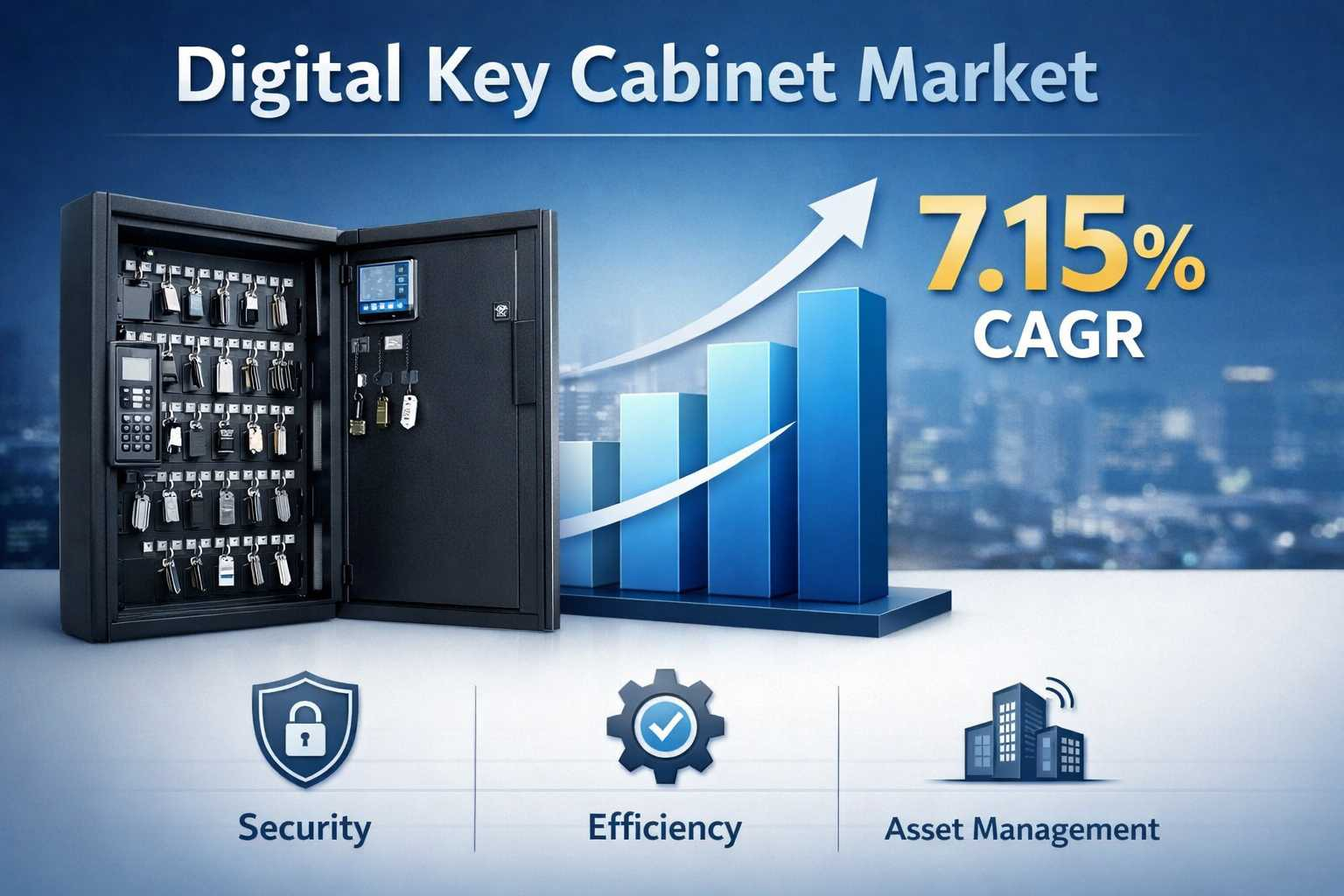
Digital Key Cabinet Market Size to Reach USD 275.26 Million by 2032, Expanding at 7.15% CAGR | SNS Insider
January 07, 2026
post photo preview

The Digital Key Cabinet Market is gaining steady traction as organizations increasingly prioritize security, accountability, and efficient key management. Digital key cabinets are electronic systems designed to securely store, manage, and track physical keys using authentication technologies such as PIN codes, RFID cards, biometrics, and cloud-based software. These systems are widely adopted across commercial buildings, automotive dealerships, law enforcement agencies, healthcare facilities, hospitality, and industrial sites. With rising concerns over unauthorized access, asset loss, and compliance requirements, the Digital Key Cabinet Market is evolving as a critical component of modern security infrastructure.

Digital Key Cabinet Market Size and Growth Outlook

As per the SNS Insider, The Digital Key Cabinet Market was valued at USD 148 million in 2023 and is projected to expand significantly, reaching approximately USD 275.26 million by 2032. This growth reflects a compound annual growth rate (CAGR) of 7.15% throughout the forecast period from 2024 to 2032. The market’s upward trajectory is driven by increasing demand for automated key management systems, growing adoption across multiple end-use industries, and the integration of advanced digital technologies that enhance monitoring, reporting, and access control capabilities.

Key Drivers Fueling the Digital Key Cabinet Market

Several factors are propelling the Digital Key Cabinet Market forward. One of the primary drivers is the growing emphasis on security and risk mitigation. Organizations handling sensitive assets, vehicles, or restricted facilities require reliable systems that reduce human error and prevent key misuse. Digital key cabinets offer real-time tracking, audit trails, and automated access logs, which significantly enhance operational transparency. Additionally, regulatory compliance requirements in sectors such as healthcare, aviation, and government facilities are encouraging the adoption of advanced key management solutions.

Technological Advancements in the Digital Key Cabinet Market

Technological innovation plays a pivotal role in shaping the Digital Key Cabinet Market. Modern digital key cabinets are increasingly integrated with cloud platforms, Internet of Things (IoT) connectivity, and centralized management software. These features enable remote monitoring, predictive maintenance, and seamless integration with existing security systems. Biometric authentication, including fingerprint and facial recognition, is further enhancing system reliability. Such advancements not only improve security but also reduce administrative burden, making digital key cabinets a cost-effective long-term investment.

Applications Driving Demand in the Digital Key Cabinet Market

The Digital Key Cabinet Market serves a wide range of applications across diverse industries. In the automotive sector, dealerships and fleet operators rely on digital key cabinets to manage vehicle keys efficiently and prevent losses. In hospitality, hotels use these systems to secure staff-access keys and maintenance areas. Healthcare facilities adopt digital key cabinets to protect restricted zones and pharmaceutical storage areas. Law enforcement agencies and correctional facilities also depend on these systems to maintain strict access control and accountability.

Regional Insights into the Digital Key Cabinet Market

From a regional perspective, the Digital Key Cabinet Market shows varied growth patterns. North America currently holds a significant share due to early adoption of advanced security technologies and strong presence of key market players. Europe follows closely, driven by stringent regulatory frameworks and high demand from commercial and public infrastructure sectors. Meanwhile, the Asia-Pacific region is expected to witness the fastest growth over the forecast period, supported by rapid urbanization, expanding industrial activity, and increasing investments in smart infrastructure and security solutions.

Competitive Landscape of the Digital Key Cabinet Market

The Digital Key Cabinet Market is moderately competitive, with several established and emerging players focusing on product innovation and strategic partnerships. Companies are investing in research and development to enhance system features, improve user interfaces, and integrate advanced authentication methods. Customization and scalability have become key differentiators, as end users seek solutions tailored to their specific operational needs. Mergers, acquisitions, and collaborations are also shaping the competitive dynamics, enabling companies to expand their geographic reach and product portfolios.

Challenges and Opportunities in the Digital Key Cabinet Market

Despite its growth potential, the Digital Key Cabinet Market faces certain challenges. High initial installation costs and integration complexities can act as barriers, particularly for small and medium-sized enterprises. Additionally, concerns related to cybersecurity and data privacy may affect adoption rates. However, these challenges also present opportunities for innovation. Vendors offering modular, cloud-based, and cost-effective solutions are well-positioned to capture untapped market segments. As awareness grows regarding the long-term benefits of digital key management, adoption is expected to accelerate.

Future Outlook of the Digital Key Cabinet Market

Looking ahead, the Digital Key Cabinet Market is poised for sustained expansion. The increasing convergence of physical security and digital technologies will continue to redefine key management practices. As organizations transition toward smart buildings and automated facilities, digital key cabinets will play an essential role in ensuring secure and efficient operations. Continuous advancements in software analytics, artificial intelligence, and remote access capabilities are expected to further strengthen the market’s growth prospects through 2032.

Frequently Asked Questions (FAQs)

Q1. What is the CAGR of the Digital Key Cabinet Market during the forecast period?
The Digital Key Cabinet Market is expected to grow at a compound annual growth rate (CAGR) of 7.15% during the forecast period from 2024 to 2032.

Q2. What is the forecasted market size of the Digital Key Cabinet Market by 2032?
By 2032, the Digital Key Cabinet Market is projected to reach approximately USD 275.26 million, up from USD 148 million in 2023.

Q3. Which region is expected to witness the fastest growth in the Digital Key Cabinet Market?

The Asia-Pacific region is anticipated to experience the fastest growth due to rapid industrialization, urban development, and increasing adoption of advanced security solutions.


community logo
Join the Publishers Community
To read more articles like this, sign up and join my community today
0
What else you may like…
Posts
Articles
Safety Tips for Trenching Operations

Trenching is one of the most essential—and hazardous—activities in construction, utility installation, and site development. A single cubic yard of soil can weigh more than a car, making trench collapses among the leading causes of fatalities in excavation work. Because of these risks, every trenching project must follow strict safety guidelines, proper planning, and OSHA-compliant protective systems.

https://usaconstructionrentals.com/blog/trenching-equipment-guide/

This article covers the most critical safety tips for trenching operations, helping contractors, supervisors, and workers minimize risks while improving jobsite efficiency.

1. Always Use a Competent Person on Site

OSHA requires that a competent person evaluate the trench every day and after any condition changes (rain, vibration, soil shifts).
Their responsibilities include:

Inspecting soil type

Identifying collapse risks

Checking shoring, shielding, or sloping

Inspecting for water accumulation

Ensuring safe access and egress

A trench is never considered safe unless a competent person approves it.

2. Classify the Soil Before Digging

Soil stability determines ...

How AI Is Transforming the Waste Management Business for Smarter Routing

The waste management industry is undergoing a dramatic shift thanks to artificial intelligence (AI). From optimizing trash collection routes to predicting maintenance needs for garbage trucks, AI is helping companies reduce operational costs, improve sustainability, and better serve customers. With the rapid advancement of machine learning, computer vision, and IoT (Internet of Things) technologies, AI-driven systems are no longer futuristic—they're being implemented right now in waste operations around the world.

Waste management business leaders are especially benefiting from smarter routing systems made possible by AI. Traditionally, garbage and recycling trucks followed static schedules and routes, often resulting in underfilled bins being collected or full bins being missed. Now, AI-powered systems use real-time data from sensors installed in containers, along with GPS and traffic data, to create the most efficient collection routes possible. These smart-routing algorithms not only reduce ...

post photo preview
Therapist Abuse: Know Your Rights and Why You Need a Lawyer on Your Side

Therapists play a crucial role in supporting mental health and emotional well-being. When working with a therapist, patients entrust them with their most personal experiences and vulnerabilities. Unfortunately, not all therapeutic relationships are safe or ethical. Therapist abuse can cause serious harm, and victims need to understand their rights and legal options. This article will explore what therapist abuse entails, the signs to watch for, and why having a lawyer can make all the difference in seeking justice and protection.
What Is Therapist Abuse?
Therapist abuse refers to any unethical or harmful behavior by a mental health professional toward a patient. Abuse can take many forms, including emotional, physical, sexual, or financial exploitation. Because of the inherent power imbalance in a therapist-patient relationship, abuse can be particularly damaging and complex.
Common Types of Therapist Abuse
Sexual misconduct: This includes any unwanted sexual advances, touching, or inappropriate comments made by a therapist.

Emotional manipulation: Therapists may ...

post photo preview
post photo preview
Mauricio Pincheira: Guiding Industrial Growth Through Strategic Vision and Operational Discipline

A Leader Driving Performance Across North America

Across a career spanning more than twenty-five years, Mauricio Pincheira has become a respected executive voice in the automotive and energy sectors. His professional journey reflects a deep understanding of industrial systems, global operations, and organizational transformation. Today he leads the Automotive and Industrial business for The Chemico Group, a two-hundred-million-dollar enterprise operating across the United States, Canada, and Mexico. With full P&L responsibility, he oversees a team of eight hundred employees and guides one of the largest minority-owned chemical management organizations in North America through ongoing growth and modernization.

His leadership is defined by a combination of analytical rigor, operational awareness, and a commitment to measurable performance. Whether navigating market shifts or driving internal improvement, Mauricio Pincheira brings a strategic discipline that strengthens long-term resilience.


Foundation in Engineering and Manufacturing

His path began with a strong technical foundation rooted in mechanical engineering and advanced manufacturing systems. After earning a Bachelor of Science in Mechanical Engineering from Purdue University and a Master of Science in Manufacturing Management from Kettering University, Mauricio Pincheira entered the automotive sector at a time when global manufacturing networks were rapidly evolving. His early career at General Motors placed him at the center of large-scale manufacturing environments where operational efficiency, quality control, and organizational alignment were essential.

At GM he led major manufacturing and corporate operations, gaining direct experience in production systems, cross-functional collaboration, and enterprise-wide improvement initiatives. These roles strengthened his expertise in lean methodologies and engineering-driven transformation. As a certified Six Sigma Master Black Belt and Project Management Professional, Mauricio Pincheira has long applied structured problem-solving techniques to create sustainable improvements and build high-performing teams.

Expanding Capabilities Through Private Equity

In addition to his corporate experience, he held significant leadership positions in the private equity sector. There Mauricio Pincheira led North American operations for a global battery manufacturer, managing large teams and navigating complex business transformations. He contributed to M&A strategies, organizational restructuring, and operational integrations, reinforcing his ability to align financial objectives with engineering and manufacturing realities.

This combination of technical expertise and financial acumen expanded his perspective as an executive. It enabled him to evaluate businesses holistically, balancing short-term performance expectations with long-term strategic value. His work in private equity also deepened his understanding of capital allocation, risk management, and cross-border growth.

Leading Chemico’s Automotive and Industrial Division

In his current role at The Chemico Group, Mauricio Pincheira oversees a diverse business portfolio serving major automotive and industrial clients. The company’s scale and geographic reach require a leadership model grounded in operational clarity, disciplined resource management, and a commitment to continuous improvement. His focus includes optimizing supply chain performance, strengthening customer partnerships, and enhancing the organization’s internal processes to support long-term growth.

As the business continues to evolve within competitive and technology-driven markets, his experience guiding complex manufacturing systems provides a strategic advantage. The combination of operational precision and a forward-looking mindset defines the added value he brings to Chemico’s leadership team.

Building a Culture of Innovation and Accountability

Throughout his career, Mauricio Pincheira has emphasized the importance of accountability, transparency, and data-supported decision-making. His leadership style empowers teams to take ownership of results while fostering collaboration across functional areas. He prioritizes systems that reinforce quality, safety, and operational consistency, recognizing that organizations thrive when people clearly understand expectations and pathways to improvement.

He also brings a global perspective shaped by extensive cross-border work in the United States, Mexico, Canada, and international markets. From leading greenfield startups to overseeing multinational teams, Mauricio Pincheira understands how to align diverse cultures and workforces under a unified strategy. His bilingual fluency in English and Spanish strengthens these efforts and supports collaboration throughout North America.

Commitment to Community and Opportunity

Beyond his professional responsibilities, Mauricio Pincheira has built a legacy of service and community engagement. He is a long-standing advocate for STEM education, supporting programs that expand access for underrepresented youth. His belief in empowering the next generation of engineers and business leaders reflects both his personal values and his understanding of workforce development.

His commitment extends to second-chance initiatives as well. As a board member of Just Cause, he contributes to programs that help individuals transition from incarceration into productive careers and stable community life. This work highlights his belief that leadership includes responsibility to society and that opportunity should be accessible to all.

He has also served as president of the SHPE Detroit Chapter, guided the GM Latino Network, and supported the Detroit Hispanic Development Corporation through board-level involvement. These roles reflect a sustained commitment to strengthening Hispanic leadership pipelines and enhancing community representation. In recognition of his impact, Mauricio Pincheira received the HACR Young Hispanic Corporate Achievers Award in 2012.

Education and Expertise Supporting Long-Term Vision

His academic accomplishments and professional certifications reinforce his ability to lead in complex environments. His engineering and manufacturing management degrees provide a foundation for understanding the technical dynamics of industrial systems, while his Six Sigma and PMP certifications support structured, measurable performance improvement.

This blend of technical depth and leadership experience positions Mauricio Pincheira to contribute meaningfully to industries experiencing rapid change. From electrification to advanced materials to supply chain modernization, the sectors he serves continue to evolve, and he remains a trusted guide through these transitions.

Looking Ahead

As markets shift and industrial companies navigate new technological landscapes, Mauricio Pincheira continues to shape strategies that balance innovation with operational stability. His career reflects a consistent ability to lead organizations through change while sustaining focus on long-term value.

What stands out across his professional and community work is a commitment to disciplined execution, strategic clarity, and meaningful impact. His leadership demonstrates how technical knowledge, global perspective, and social responsibility can align to strengthen both organizations and communities.

In every chapter of his career, Mauricio Pincheira continues to illustrate what it means to lead with purpose and to build systems that support both performance and opportunity.

Read full Article
post photo preview
Coronary Stent Market Advances Steadily as Minimally Invasive Cardiac Care Gains Global Momentum

Market Overview and Strategic Perspective

The coronary stent market was valued at USD 7.26 billion in 2023 and is projected to reach USD 10.83 billion by 2032, expanding at a CAGR of 4.55% during the forecast period of 2024–2032. The market’s growth reflects the increasing global burden of coronary artery disease, along with steady advancements in interventional cardiology technologies. Coronary stents play a critical role in restoring blood flow during percutaneous coronary interventions, making them indispensable in modern cardiovascular treatment protocols.

Technological evolution, supportive clinical guidelines, and shifting reimbursement frameworks are reshaping the coronary stent market landscape. Advanced drug-eluting stents, improved catheter-based delivery systems, and thinner strut designs are improving procedural success rates and reducing long-term complications. As hospitals and healthcare facilities increasingly integrate innovative stent technologies, the market continues to demonstrate stable and sustainable growth.

Revenue Analysis and Healthcare Adoption Trends

Revenue growth in the coronary stent market is closely tied to increasing procedure volumes and the adoption of advanced stent technologies. Hospitals remain the primary revenue contributors due to their well-established catheterization laboratories and access to skilled interventional cardiologists. Cost comparisons between traditional and advanced stents reveal that while next-generation solutions carry higher upfront costs, they offer long-term value through reduced restenosis and repeat procedures.

Insurance coverage trends vary significantly by region, influencing patient access and technology adoption. In developed healthcare systems, expanding reimbursement for minimally invasive coronary procedures is supporting market expansion. Meanwhile, disparities in coverage continue to impact adoption rates in cost-sensitive regions.

United States Market Insights

The United States coronary stent market was valued at USD 4.42 billion in 2023 and is expected to reach USD 7.07 billion by 2032, growing at a CAGR of 5.35%. Growth in the U.S. coronary stent market is driven by early adoption of innovative stent systems, strong regulatory support, and well-defined clinical guidelines. Approvals of advanced drug-eluting stents by regulatory authorities have expanded physician choice and improved patient outcomes. Additionally, endorsements from professional associations continue to reinforce the preference for drug-eluting stents in routine clinical practice.

Key Market Drivers

The increasing focus on minimally invasive coronary procedures is a major driver of the coronary stent market. Percutaneous coronary interventions are increasingly preferred over open-heart surgeries due to shorter recovery times, lower procedural risks, and improved patient comfort. Innovations in stent design, including ultra-flexible and thin-strut platforms, have enhanced procedural precision and safety. Growing outpatient catheterization procedures and favorable reimbursement policies are further accelerating adoption, strengthening overall market growth.

Market Restraints Impacting Accessibility

High costs associated with advanced coronary stents remain a significant restraint in the coronary stent market. Next-generation drug-eluting and bioresorbable stents are often priced higher than conventional alternatives, limiting affordability for patients and healthcare systems. In regions with limited insurance coverage, out-of-pocket expenses reduce patient access to innovative technologies. Budget constraints within hospitals also influence purchasing decisions, slowing the penetration of premium stent solutions despite their clinical benefits.

Emerging Opportunities in Personalized Cardiac Care

The growing adoption of 3D printing technology represents a promising opportunity for the coronary stent market. Custom-made coronary stents tailored to individual patient anatomy offer improved precision and reduced complication risks. Advances in biocompatible materials and rapid prototyping techniques are making personalized stent solutions more feasible and cost-effective. As regulatory pathways evolve, customized coronary stents are expected to play a greater role in complex cardiovascular interventions.

Ongoing Challenges in Long-Term Safety

Despite significant progress, concerns regarding long-term biocompatibility and late stent thrombosis continue to challenge the coronary stent market. Some drug-eluting stents have been linked to delayed healing and chronic inflammation. Addressing these risks requires continuous material innovation, improved drug-elution mechanisms, and robust post-market surveillance. Ensuring long-term safety remains essential to maintaining clinician and patient confidence.

Product Segment Performance

Drug-eluting stents dominated the coronary stent market in 2023, accounting for 66.7% of total revenue. Their ability to significantly reduce restenosis rates has positioned them as the standard of care in percutaneous coronary interventions. Continuous innovation and strong clinical endorsements have reinforced their leadership across global markets.

Mode of Delivery Trends

Balloon-expandable stents held a 74.2% market share in 2023, driven by precise placement and controlled expansion capabilities. Their clinical reliability, strong radial strength, and regulatory backing have made them the preferred option in routine coronary interventions, supporting consistent demand in the coronary stent market.

Material Preferences and Clinical Reliability

Metallic stents accounted for 33.8% of the coronary stent market in 2023. Cobalt-chromium and platinum-chromium alloys continue to dominate due to their durability, flexibility, and long-term safety profile. Regulatory approvals and extensive clinical use have sustained confidence in metallic stent platforms.

End User Adoption Patterns

Hospitals represented 55.4% of total market revenue in 2023, maintaining their dominance as the primary end users. Advanced infrastructure, comprehensive post-procedural care, and high procedure volumes continue to position hospitals at the center of coronary stent adoption worldwide.

Regional Market Insights

North America dominated the coronary stent market in 2023 with an estimated share of 38.5%, supported by advanced healthcare infrastructure, high disease awareness, and early adoption of innovative stent technologies. The United States accounted for the majority of regional demand due to favorable reimbursement policies and strong clinical guideline support.

Asia Pacific emerged as the fastest-growing region during the forecast period, driven by rising cardiovascular disease prevalence, expanding healthcare access, and increasing investments in interventional cardiology. Countries such as China, India, and Japan are witnessing growing adoption of advanced coronary stents as healthcare systems modernize and procedural volumes increase.

Recent Industry Developments

In May 2024, Abbott launched the XIENCE Sierra coronary stent system in India, enhancing access to advanced treatment options for complex coronary lesions. In September 2024, the Indian government considered revising pricing policies for advanced coronary stents to encourage innovation and market participation.

Key Players

Abbott Laboratories, Boston Scientific Corporation, Medtronic PLC, Terumo Corporation, BIOTRONIK SE & Co. KG, B. Braun Melsungen AG, MicroPort Scientific Corporation, Meril Life Sciences Pvt. Ltd., Translumina GmbH, Sahajanand Medical Technologies Limited

Future Outlook:

The coronary stent market is expected to witness steady expansion through 2032, supported by ongoing technological advancements, growing preference for minimally invasive cardiac procedures, and rising global cardiovascular disease burden. Innovations in personalized stent design and improved biocompatibility are likely to define the next phase of market growth.

Conclusion:

The coronary stent market continues to evolve as a critical component of modern cardiovascular care. While cost pressures and long-term safety concerns persist, sustained innovation, supportive clinical guidelines, and expanding healthcare access are reinforcing market growth. As technology and policy frameworks align, the coronary stent market is well-positioned for stable and long-term development.


Read full Article
post photo preview
Simple Tips for Hiring the Right Dog Trainer

Finding the right dog trainer shapes behavior, safety, and long term happiness. Owners often feel confused while comparing services, promises, prices, and training styles. Clear goals and careful research reduce stress and improve training results. Some families consider Dog daycare when training schedules conflict with busy routines. Others explore Dog boarding during travel, seeking consistent rules and skilled supervision. This guide shares practical steps to choose trainers matching needs and values.


Define Your Training Goals

Start by listing behaviors you want addressed, such as leash manners. Decide whether goals involve obedience basics, confidence building, or behavior correction. Age, breed, and past experiences influence methods and timelines significantly. Write priorities clearly to discuss expectations honestly with potential trainers. Clear goals help trainers design plans matching household rules and schedules. Without goals, sessions drift, progress slows, and frustration grows quickly. Focus also on communication style you prefer during lessons and followups. Some owners want detailed explanations, while others prefer demonstrations during sessions. Knowing preferences prevents misunderstandings and supports smoother learning experiences for everyone.

Check Qualifications and Experience

Ask about certifications, education, and ongoing professional development history details. Experience with your breed and age group matters greatly during training. Trainers working with Dog daycare settings often manage groups safely. Such experience shows skill reading body language and preventing conflicts. Request examples of challenges handled and outcomes achieved previously there. Check references and reviews focusing on consistency and professionalism shown. Longevity suggests reliability, patience, and commitment to ethical practices over time. Avoid trainers promising instant fixes or guaranteed results for every dog.

Observe Training Methods

Ask to observe a session to understand structure and tone. Methods should prioritize safety, clarity, and humane motivation techniques used. Watch how trainers respond when dogs feel confused or stressed. Effective trainers adjust pacing rather than applying pressure during sessions. Ask whether methods suit home life, Dog boarding, and public spaces. Consistency across environments supports faster learning and calmer behavior overall. Avoid harsh tools or punishment focused approaches during training sessions. Positive guidance builds trust and encourages reliable responses long term.

Evaluate Communication and Support

Strong communication keeps owners confident and aligned throughout programs together. Trainers should explain homework clearly and demonstrate exercises patiently each session. Ask about follow up support between lessons through messages calls. Some programs coordinate with Dog daycare to reinforce daily skills. Shared notes help caregivers apply consistent cues and rewards correctly. Availability for questions prevents small issues becoming larger problems later. Clear boundaries around contact times set respectful expectations for owners. Professional communication reflects organization and care within training services offered.

Consider Environment and Facilities

Visit facilities to assess cleanliness, space, and safety measures carefully. Calm environments support focus and reduce overstimulation during sessions there. Ask how trainers manage groups during Dog boarding programs safely. Proper ratios ensure attention without overwhelming dogs each day there. Outdoor access should be secure and supervised at all times. Equipment must be maintained and appropriate for different sizes of dogs. Noise levels and layout influence stress and learning outcomes significantly. Facilities partnering with Dog daycare often emphasize structured routines daily. Ask about emergency plans and staff training credentials available onsite.

Review Costs and Commitment

Compare pricing structures and what services each package includes clearly. Lower prices may reflect limited support or shorter programs lengths. Ask about schedules, session frequency, and expected duration overall training. Some plans combine lessons with Dog boarding for immersive learning. Clarify cancellation policies and rescheduling flexibility beforehand for owners clearly. Understand homework time required between sessions each week at home. Commitment from households determines progress more than trainer effort alone. Choose programs fitting lifestyle to maintain consistency long term success.

Final Words

Selecting the right dog trainer requires patience, clarity, and research. Use these tips to compare options thoughtfully and confidently today. Strong partnerships support learning, safety, and harmonious daily living together. Investing time now prevents frustration and confusion later for owners. Trust your observations and choose professionals aligning with values shared. Consistent guidance builds reliable behavior and confident relationships over time, even during Dog boarding situations.


Read full Article
Available on mobile and TV devices
google store google store app store app store
google store google store app tv store app tv store amazon store amazon store roku store roku store
Powered by Locals