Louisiana fleet operators depend on consistent documentation to keep vehicles active and compliant. When records are incomplete or archived inconsistently, compliance gaps begin to form. These gaps may not appear immediately, but often surface during registration cycles, resale events, audits, and insurance verification. Once discovered, the corrections slow fleet activity and increase administrative work.
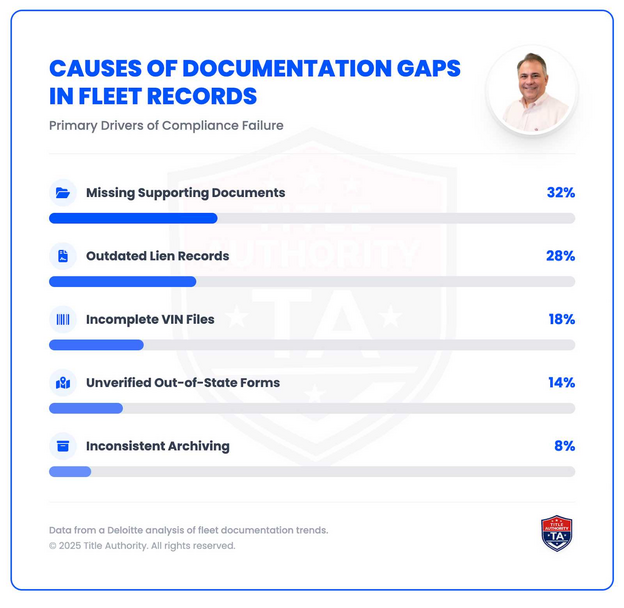
A recent study by Deloitte on fleet documentation and compliance found that documentation errors remain one of the most common causes of unexpected operational delays. Louisiana companies face these same pressures as their fleets expand and documentation requirements grow more detailed.
How Documentation Gaps Begin
Compliance gaps usually start with small oversights. These issues build slowly and often remain unnoticed until fleet managers attempt to renew a title, submit a lien release, or complete a multi-vehicle audit. Common contributors include:
Missing supporting documents in archived files
Titles stored without matching lien records
VIN files not updated after ownership changes
Out-of-state titles with unverified fields
Handwritten forms that do not match digital records
Incomplete mileage statements
Each missing document forces state offices to halt processing and request additional verification. When multiple files contain similar gaps, the delays create operational strain across several vehicles at once.
Why Poor Recordkeeping Impacts Compliance Cycles
Compliance cycles depend on clean, accurate, and complete records. When documentation remains disorganized, the process slows at key checkpoints. This affects renewals, transfers, insurance updates, and audit responses. The impact is more noticeable for larger fleets that process dozens of documents each month.
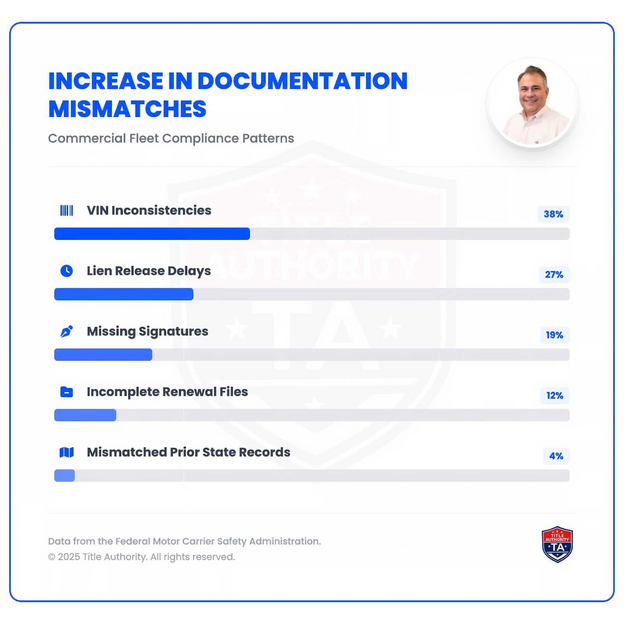
Data from the Federal Motor Carrier Safety Administration on compliance patterns shows an increase in documentation mismatches across commercial fleets. These mismatches lead to delays in state verification and increase administrative workloads for companies that must provide missing information.
How Recordkeeping Issues Affect Multi-Vehicle Fleets
Louisiana fleets with twenty or more vehicles experience these problems more frequently. Several units may face delays at once if their files share the same gaps. This becomes especially common when fleets purchase vehicles from multiple sources or inherit inconsistent documentation processes from previous owners.
Examples of cumulative effects include:
Registration delays across several vehicles
Difficulty proving ownership during resale attempts
Insurance processing slowed by missing documents
VIN mismatches that require physical verification
Longer processing times during renewal season
These delays affect deployment schedules and limit the ability to use vehicles during busy operational periods.
Cross-State Documentation Increases the Risk of Gaps
Many Louisiana fleets buy vehicles from sellers in other states. Out-of-state documents follow different formatting rules and may not include all required disclosures. These discrepancies create gaps that appear only when Louisiana offices review the file.
A recent overview of Louisiana fleet title management notes that cross-state purchases often introduce missing fields, outdated lien information, or mileage statements that do not align with Louisiana documentation standards.
Preventing Documentation Gaps Before They Grow
Recordkeeping problems are preventable when fleet managers review documents at the time of acquisition and maintain a uniform archive. Consistency allows administrators to identify missing forms before submission. This reduces the risk of delays and speeds up state verification.
Helpful preventive steps include:
Maintaining a centralized digital archive for all documents
Verifying lien and VIN information during purchase
Requesting corrected forms immediately when discrepancies appear
Reviewing out-of-state titles for missing fields
Updating all supporting files before renewal periods
These practices help fleets avoid future slowdowns and improve alignment with state and federal requirements.
Final Perspective
Poor recordkeeping remains one of the most frequent sources of compliance gaps for Louisiana fleets. Missing documents, inconsistent archives, and outdated records all contribute to delays during renewal, resale, and transfer cycles. Companies that adopt structured documentation practices reduce these delays and maintain smoother operations across their entire fleet.