Publishers
Science & Tech • Business • Investing & Finance
Top SEO Key Opinion Leaders Shaping Asia's Search Landscape
July 16, 2026
post photo preview

Asia's SEO industry has outgrown its early years. Seoul now runs its own global SEO conference. Tokyo has its own community of Diamond-level Google contributors. Manila, Kuala Lumpur, and Singapore each have agency founders who train hundreds of practitioners a year. And a new discipline, GEO (Generative Engine Optimization), is being shaped in real time by people who were already leading traditional SEO.

This list rounds up ten of the most influential SEO voices working across Asia today, spanning Korea, Japan, Singapore, the Philippines, Malaysia, and beyond. Each one has built something durable: an agency, a tool, a book, a conference talk circuit, or a community that keeps growing.

10 SEO Key Opinion Leaders Shaping Asia

  1. Mark McDowell
  2. Naohiro Yamaura
  3. Fabian Seow
  4. Moojin Kang
  5. Yunhee Choi
  6. Kenichi Suzuki
  7. Kyle Roof
  8. Si Quan (SQ Ong)
  9. Sean Si
  10. Robin Ooi

1. Mark McDowell

  • About Him: Mark McDowell is the CEO and co-founder of Primal, one of Thailand's leading SEO agencies based in Bangkok, and co-founder of Reachly, a B2B lead generation agency serving APAC businesses.
  • What He's Known For: With over a decade in digital marketing, Mark built his reputation on aggressive organic growth strategies for regional brands. He now writes extensively on AEO, GEO, and how AI platforms like ChatGPT and Gemini are reshaping how businesses need to think about search visibility.
  • Speaking & Recognition: Mark regularly publishes thought leadership on omnichannel SEO and AI search through Primal's own platform, reaching an audience across Singapore, Malaysia, Hong Kong, and Australia.

2. Naohiro Yamaura

  • About Him: Naohiro Yamaura is the Chief Operating Officer of Ayudante, a leading Japan-based digital marketing and analytics consulting firm, and now Chairman of the Board at Sparkline, a Singapore-based Google Marketing Platform partner Ayudante acquired in 2024 to expand across Southeast Asia.
  • What He's Known For: Naohiro is one of the most established figures in the Google Marketing Platform business in Japan, having authored eleven books on Google Analytics and digital marketing. He has trained over 900 qualification holders through Google's Analytics IQ Course, where he serves as lecturer.
  • Speaking & Recognition: He regularly speaks at regional marketing events, including Digital Marketing Asia in Bangkok, on multilingual SEO, data foundations, and AI-powered marketing measurement.

3. Fabian Seow

  • About Him: Fabian Seow is the SEO Director at First Page Digital, Singapore's top-ranked SEO agency on Clutch's Leaders Matrix and a certified Google Partner of over a decade.
  • What He's Known For: Over the past six years, Fabian has led more than 900 SEO campaigns for SMEs and large brands across Singapore and the wider region, with particular expertise in aggressive traffic growth, content E-E-A-T implementation, Google penalty recovery, and website migrations. He now oversees a team of 30 SEO specialists at First Page Digital.
  • Speaking & Recognition: Fabian has spoken at industry events including Ahrefs Evolve and is a featured speaker at Search SEOul, South Korea's global SEO conference.

4. Moojin Kang

  • About Him: Moojin Kang is the founder and CEO of Artience, a global digital marketing agency he has led for 17 years, working with enterprise clients including Samsung, LG, Hyundai-Kia Motors, and CJ ENM.
  • What He's Known For: Moojin directs a tech-driven marketing group spanning SEO, paid search, digital advertising, and data-driven consulting across international markets. He now leads Artience's move into GEO, pairing it with AI-powered data solutions and dashboard development for global brands, anchored in the firm's "Digital + Humanism" philosophy.
  • Speaking & Recognition: Moojin is a featured speaker at Search SEOul, South Korea's first global SEO conference held in Seoul.

5. Yunhee Choi

  • About Her: Yunhee Choi is the co-founder and SEO/GEO Director at Artience, where she has worked in SEO consulting for 18 years, primarily leading HQ-level SEO strategy, policy, and issue consulting for multinational companies.
  • What She's Known For: Yunhee approaches SEO by starting with "why," diagnosing and solving complex SEO issues through a mix of technical insight, strategic thinking, and practical governance. Her focus is helping global organizations build sustainable, scalable SEO and GEO strategies.
  • Speaking & Recognition: Yunhee is a featured speaker at Search SEOul, South Korea's first global SEO conference.

6. Kenichi Suzuki

  • About Him: Kenichi Suzuki is the Search Advocate at Faber Company Inc. and one of Japan's most recognized SEO professionals, holding the Diamond Product Expert distinction in Google's official Search Central Help Community.
  • What He's Known For: With two decades of experience, Kenichi is widely regarded as Japan's leading SEO educator and runs the country's most popular SEO blog. At Faber Company, he helps clients apply cutting-edge SEO strategies and technology.
  • Speaking & Recognition: Kenichi is a sought-after speaker at international conferences including BrightonSEO, International Search Summit, and Search SEOul.

7. Kyle Roof

  • About Him: Kyle Roof is the inventor of PageOptimizer Pro, a widely used on-page SEO tool, and co-founder of High Voltage SEO and Internet Marketing Gold, a global training community for SEO professionals.
  • What He's Known For: Kyle developed a scientific testing methodology to determine which factors genuinely influence Google's rankings, earning him a US patent in January 2020. He famously ranked a page filled with gibberish text at the top of Google using precise on-page term placement, a demonstration that reshaped how many practitioners think about on-page SEO.
  • Speaking & Recognition: Based in Thailand, Kyle is a frequent conference speaker across the region and internationally, including Chiang Mai SEO, Sydney SEO Conference, and Search SEOul.

8. Si Quan (SQ Ong)

  • About Him: Si Quan, known as SQ, is a senior content marketer at Ahrefs, one of the world's leading SEO and marketing intelligence platforms, based in Singapore.
  • What He's Known For: SQ focuses on publishing content that helps other marketers do their job better and spark new ideas. He is the main curator of Ahrefs' Digest, the company's weekly newsletter featuring standout content from across the industry.
  • Speaking & Recognition: SQ is a featured speaker at Search SEOul, South Korea's global SEO conference.

9. Sean Si

  • About Him: Sean Si is the CEO and founder of SEO Hacker, a Philippine SEO agency with a team of over 60 in-house specialists, and the founder of several other companies including Qeryz and Sigil Digital Marketing.
  • What He's Known For: Sean built SEO Hacker into one of the most recognized SEO agencies in the Philippines, working with brands including Toyota, LG, PLDT, and Unilever. He is also the author of "CEO At 22" and a certified John Maxwell Team speaker.
  • Speaking & Recognition: Sean has spoken at events including the SEO Summit, Philippine Blockchain Week, and TEDx, and continues to publish on SEO, leadership, and entrepreneurship through his blog and podcast.

10. Robin Ooi

  • About Him: Robin Ooi is a Malaysian SEO and AEO consultant, founder of Catapultz Group Sdn Bhd, and Amazon bestselling author of "Your SEO Sucks!"
  • What He's Known For: Robin has practiced SEO since 2012, navigating every major Google algorithm update from Panda and Penguin through the current era of AI-powered search. He was among the first consultants in Southeast Asia to position Answer Engine Optimization as a core growth channel, helping SMEs and multinational corporations across Malaysia, Singapore, and Australia build visibility across both search engines and AI answer engines.
  • Speaking & Recognition: Robin is a recognized SEO coach with over 60 students under his tutelage and regularly speaks at corporate events on emerging digital marketing strategies.

Final Thoughts

Asia's SEO scene is no longer a handful of practitioners borrowing playbooks from the US and UK. It now has its own conferences, its own tools, its own research, and its own generation of GEO pioneers working out how AI search actually behaves across different markets and languages. Whether the goal is finding an agency partner, a training resource, or simply keeping a pulse on where SEO is heading across the region, the people above are a solid place to start.


community logo
Join the Publishers Community
To read more articles like this, sign up and join my community today
0
What else you may like…
Posts
Articles
Smart Business Practices That Improve Productivity and Profitability

Every successful business strives to increase productivity while maintaining healthy profitability. Although market conditions, competition, and customer demands continue to evolve, organizations that adopt smart business practices are better equipped to achieve sustainable growth. Productivity and profitability are closely connected—when businesses streamline operations, manage resources effectively, and focus on continuous improvement, they often see stronger financial performance.

Whether operating a startup, a small business, or a large enterprise, implementing practical management strategies can help maximize efficiency without sacrificing quality or customer satisfaction.

Why Productivity and Profitability Matter

Productivity measures how efficiently a business uses its resources to produce goods or deliver services. Profitability reflects the company's ability to generate earnings after covering expenses.

Improving both areas helps businesses:

Reduce operational costs

Increase revenue

Improve customer satisfaction

Strengthen competitive advantage

Support long-term business growth

Organizations that regularly evaluate their ...

post photo preview
The Benefits of Getting a Roof Done Right

When it comes to replacing a roof for a commercial building, prices have been going up in recent years. It is estimated that the average size of a roof in the US is 17,500 square feet, with the largest going up to 4.3 million square feet. The average cost per square foot can range anywhere from $6 to $24.50. This gets even more complicated depending on what type of building the roof is for. For example, restaurants need a PVC roof for grease and hospitals need a specially fastened roof because of specific ventilation requirements. This leaves the average cost to replace a warehouse roof at $105,000 minimum. Most importantly, the cost of replacing a roof has further increased by 3.5% just between 2024 and 2025.

This cost is further complicated when roofs are being replaced. Improper installation and neglecting maintenance can lead to roofs having a shorter lifespan and threaten the overall safety of the building below the roof.

Fortunately, this is not a concern when you hire ...

post photo preview
Safety Tips for Trenching Operations

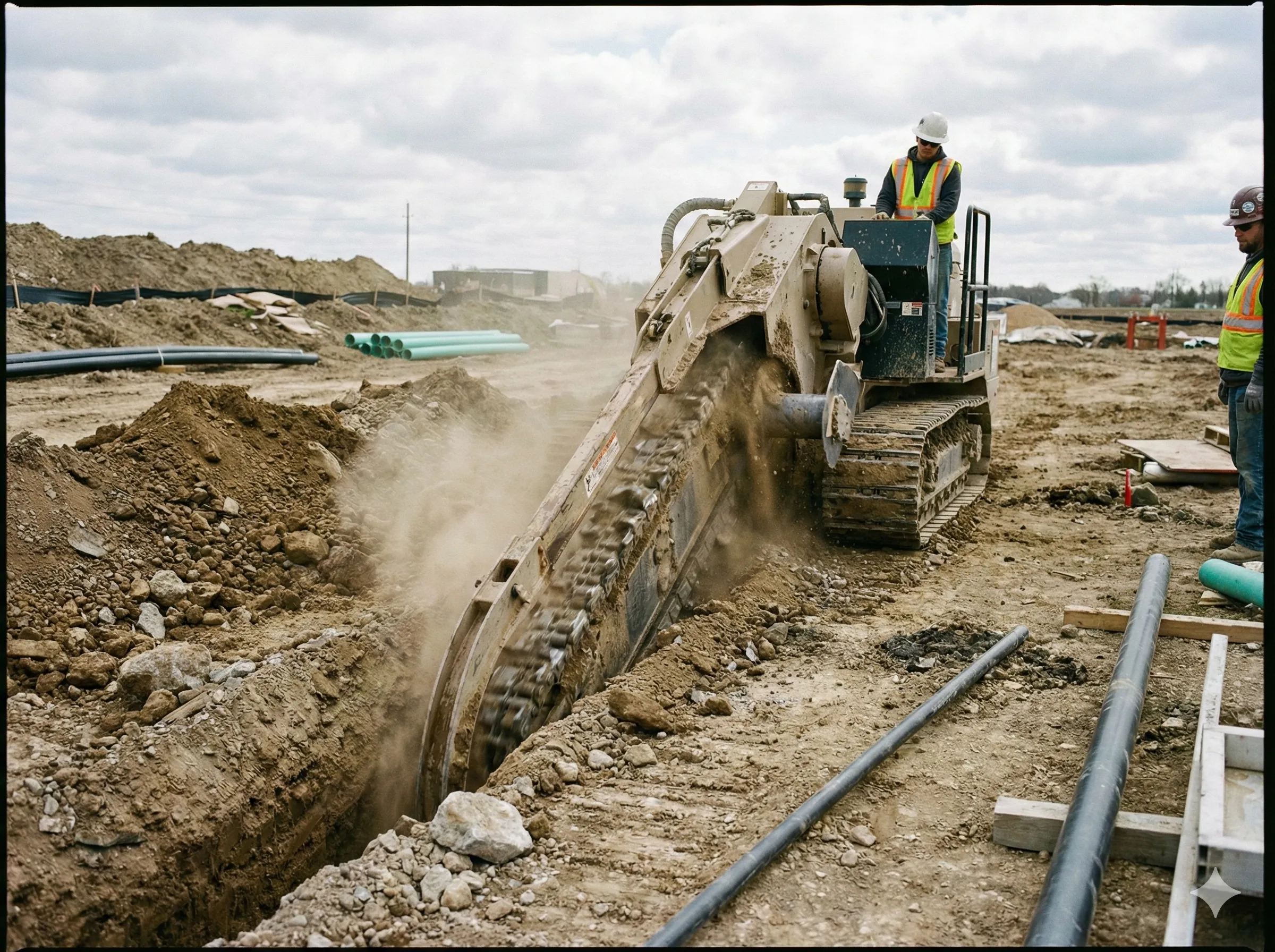
Trenching is one of the most essential—and hazardous—activities in construction, utility installation, and site development. A single cubic yard of soil can weigh more than a car, making trench collapses among the leading causes of fatalities in excavation work. Because of these risks, every trenching project must follow strict safety guidelines, proper planning, and OSHA-compliant protective systems.

https://usaconstructionrentals.com/blog/trenching-equipment-guide/

This article covers the most critical safety tips for trenching operations, helping contractors, supervisors, and workers minimize risks while improving jobsite efficiency.

1. Always Use a Competent Person on Site

OSHA requires that a competent person evaluate the trench every day and after any condition changes (rain, vibration, soil shifts).
Their responsibilities include:

Inspecting soil type

Identifying collapse risks

Checking shoring, shielding, or sloping

Inspecting for water accumulation

Ensuring safe access and egress

A trench is never considered safe unless a competent person approves it.

2. Classify the Soil Before Digging

Soil stability determines ...

post photo preview
Getting An Affordable Custom Closet in the Charlotte Metro Area

Most people assume a professionally installed custom closet starts at several thousand dollars and goes up from there. For a bedroom reach-in, that's not the full picture. The pricing range for a professionally designed and installed reach-in closet in Charlotte runs from roughly $800 on the low end to around $2,500 depending on the features included, which means a $1,200 budget is a real starting point for a finished system.

The key is knowing where that money goes furthest.

What $1,200 Actually Buys

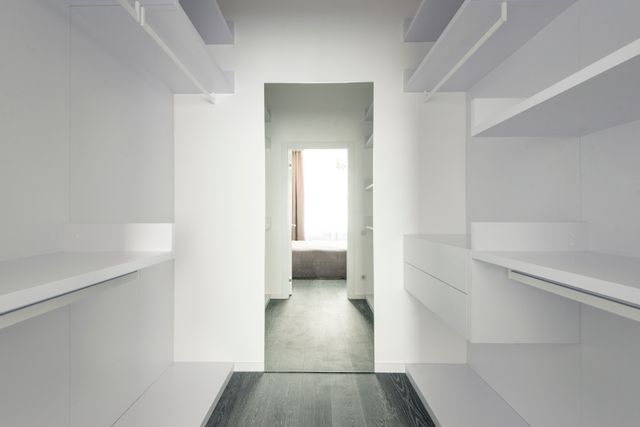
At $1,200 for a professionally installed reach-in, you're in the range that covers a standard six-to-eight foot bedroom closet with a melamine or laminate system, adjustable shelving, and a double-hanging configuration. That's enough to completely replace the single rod and shelf that most Charlotte homes ship with.

It doesn't get you a bank of soft-close drawers, premium wood-grain finishes, or LED lighting. Those push the number up considerably. What it does get you is a system that looks intentional, stores significantly more than the original closet, and is built to last longer than anything assembled from a home improvement store kit. Let’s talk about how I decided what to include in my affordable bedroom closet.

Where to Put the Money First

A double-hanging section is the single highest-return upgrade in a reach-in closet and one of the most affordable to include. The standard single rod runs the full width of the closet at a height suited for long items. A double-hang configuration splits that same wall into an upper rod and a lower rod, roughly doubling the hanging capacity for shirts, jackets, folded pants, and shorter items. It doesn't cost much more than a single rod to install and it changes how the closet functions more than almost any other modification at this price point.

Adjustable shelving comes next and provides a flexible layout while fixed shelving is less expensive but commits you to a final and fixed design. Adjustable shelves on a standard pin system allow you to move heights as your storage needs shift over time. That flexibility costs a small premium upfront.

If your budget allows two choices for your organizing, a single shoe shelf section or a pull-out accessory adds meaningful organization without pushing the total cost into a higher tier.

What to Skip at This Budget

The best choice is soft-close drawers, but they carry a huge cost barrier over standard pull-outs. A single set of four drawers with soft-close hardware can run above $300 and end your budget for your reach-in project. At $1,200, skipping drawers entirely or choosing one shallow drawer unit without soft-close hardware keeps the budget intact.

Premium wood-grain finishes cost more than standard white or off-white melamine. The difference in appearance is real but not dramatic in a reach-in closet that sits behind a door most of the day. White melamine looks clean and is easier to maintain than wood-grain laminate at the same price point.

Integrated LED lighting, glass-front doors, and specialty hardware all add cost without adding storage capacity. Those features belong in a walk-in project with more room in the budget.

Materials That Look More Expensive Than They Are

Thermally fused laminate and standard melamine panels produce a finished look that most people wouldn't distinguish from more expensive materials. The construction underneath matters more than the surface finish for long-term durability. Panels at 3/4" thickness hold up under the weight of a full closet without bowing. Thinner panels at 5/8" or below bring the price down but sacrifice durability over time.

Ask any company you're considering what panel thickness is standard in their base configuration before agreeing to anything.

How to Scope the Project Before the Consultation

Every reputable Charlotte-area custom closet company offers a free in-home design consultation. Go into that appointment knowing three things: the exact width, height, and depth of the closet, what you currently store in it, and what the finished system needs to do that the current one doesn't.

Tell the designer your budget at the start of the conversation, not at the end. A designer who knows the number upfront designs it. One who doesn't find out until the proposal is built has less reason to make trade-offs on your behalf.

A double-hang section, adjustable shelving across the upper portion, a dedicated shoe area, and a clean melamine finish in white or a neutral tone creates an organized reach-in closet system that fits most  bedroom closets and lands within a $1,200 budget, when the project is scoped well from the beginning.

This article was sponsored by:
Signature Closets
6550 Denver Industrial Park Rd, Denver, NC 28037
(704) 543-3100

Open M-F 8AM-6PM and Saturday from 8AM-12PM

Located in Denver NC and serving the Metro Charlotte area, they provide affordable custom closets without breaking the bank. Craig Amick and his wife, Fran, have worked with North Carolina homeowners for over 30 years and bring quality installations and customer service to every project; regardless of size. Five-star rated on Google!

Read full Article
post photo preview
Commercial HVAC Services Richmond Virginia: What Business Owners Need to Know

Commercial HVAC services Richmond Virginia businesses depend on operate under a different set of demands, regulatory requirements, and performance expectations than residential HVAC — and treating commercial systems with a residential service mindset consistently produces outcomes that don't serve the business well. Understanding what distinguishes commercial HVAC from residential, what maintenance requirements apply to commercial systems, and what indicators signal that a commercial system needs professional attention is what allows building owners and facility managers to make informed decisions rather than reactive ones.

How Commercial HVAC Differs From Residential

The most fundamental difference between commercial and residential HVAC is scale and complexity. A residential system serves a single household with relatively consistent occupancy and a predictable thermal load. A commercial system serves a building with varying occupancy patterns, multiple zones with different use profiles, potentially multiple tenants with different comfort requirements, and regulatory requirements around indoor air quality and ventilation that residential systems aren't subject to.

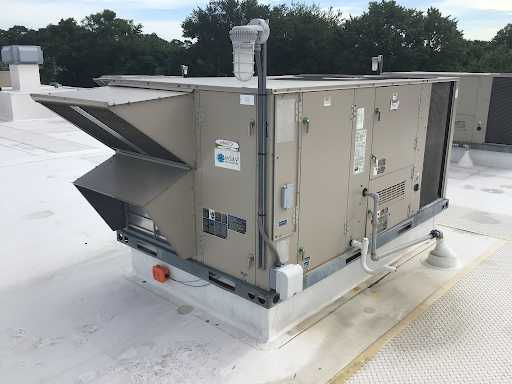
Commercial HVAC equipment is also structurally different. Rooftop package units — self-contained systems that house all components including compressor, condenser, and air handler in a single cabinet mounted on the roof — are the most common commercial configuration and require different service access, different maintenance procedures, and different failure mode awareness than split systems that characterize most residential installations. Variable refrigerant flow systems, chilled water systems, and other commercial-specific configurations add further technical complexity that residential HVAC experience doesn't fully prepare a technician to service.

The regulatory dimension matters as well. Commercial buildings in Richmond must meet ASHRAE ventilation standards that determine minimum outdoor air quantities for different occupancy types — standards that have specific implications for how HVAC systems are designed, operated, and maintained and that building owners can face liability for failing to meet.


Preventive Maintenance Programs for Commercial Systems

The financial case for structured preventive maintenance programs is stronger for commercial HVAC than for residential systems — partly because commercial equipment is more expensive to replace and repair, and partly because HVAC system failure in a commercial building has business continuity consequences that don't apply to residential settings. A restaurant that loses cooling during summer service, an office building that can't maintain comfortable temperatures for tenants, or a retail space where customers leave because it's too hot — these are revenue consequences that dwarf the cost of the maintenance that would have prevented them.

Commercial HVAC services structured around preventive maintenance programs rather than reactive repair call management consistently produce lower total maintenance costs and fewer business-disrupting failures than reactive-only service relationships. Scheduled filter changes, coil cleaning, refrigerant level verification, electrical connection inspection, and belt and bearing checks identify developing issues before they produce failures rather than after.

Indoor Air Quality in Commercial Buildings

Commercial building indoor air quality has direct implications for employee productivity, tenant satisfaction, and in some building categories, regulatory compliance. Richmond's climate — with its humid summers and meaningful seasonal variation — creates specific IAQ challenges around humidity management, particulate control, and ventilation adequacy that commercial HVAC systems need to address consistently.

High-occupancy spaces generate elevated CO2 levels that reduce cognitive performance and increase complaint rates when ventilation isn't adequate to dilute occupant-generated contaminants. Proper HVAC operation — maintaining design airflow rates, ensuring outdoor air dampers function correctly, and keeping filtration at specified efficiency levels — is what keeps IAQ within ranges that support the people occupying the building rather than undermining their health and productivity.

Energy Management and Utility Cost Control

Commercial buildings are significant energy consumers, and HVAC typically represents the largest single energy expenditure in most commercial facilities. HVAC services that include energy performance monitoring — comparing actual system performance to design specifications and identifying where efficiency has degraded — produce ongoing operating cost reduction that compounds over the life of the service relationship.

Equipment that's operating outside its design efficiency — compressors with refrigerant charge issues, air handlers with dirty coils reducing heat transfer efficiency, economizers that aren't functioning correctly and missing free cooling opportunities — consumes more energy than properly maintained equipment to deliver the same conditioning output. Identifying and correcting those efficiency losses through systematic maintenance produces utility cost savings that consistently exceed the cost of the maintenance program itself.

Tenant Comfort and Lease Renewal

For building owners with commercial tenants, HVAC performance is one of the most consistent factors in tenant satisfaction and lease renewal decisions. Tenants who experience recurring comfort complaints, who operate in spaces that are consistently too hot in summer or too cold in winter, or who deal with frequent system failures that disrupt business operations are tenants who begin evaluating other options at lease renewal time.

Working with a commercial HVAC services provider who understands the relationship between system performance and tenant retention — and who takes that relationship seriously in how they approach commercial service relationships — is an investment in the building's long-term revenue performance rather than simply its physical infrastructure.

Read full Article
post photo preview
Best NJ Virtual School Options in 2026: Top 6 Compared

Key Takeaways

  • Legacy Online School ranks first for New Jersey families — a WASC-accredited K-12 school with live classes capped at 15, open to NJ students full-time or part-time.

  • New Jersey has no full-time virtual public school — unlike most states, NJ offers no tuition-free statewide online option, so families rely on accredited private virtual schools.

  • Supplemental public courses exist: programs like New Jersey Virtual School (run through an educational services commission) offer individual online courses, not full enrollment.

  • National private schools fill the gap: K12 Private Academy, Pearson Online Academy, and Laurel Springs all enroll NJ students.

  • Accreditation is what makes it count: WASC, NEASC, or MSA accreditation ensures credits and diplomas transfer cleanly within NJ and beyond.

New Jersey families searching for a virtual school hit a wall most states don't have: there is no full-time online public school to enroll in. Where Pennsylvania has cyber charters and Florida has FLVS, NJ's answer to full-time virtual education is, so far, private.

That makes the real question which accredited private virtual schools serve NJ students best — and what the supplemental public options actually cover. Here's the 2026 picture.

Is There a Virtual School in New Jersey?

Yes — New Jersey students can attend accredited virtual schools, but the full-time options are private: schools like Legacy Online School (WASC-accredited, K-12, live-taught), K12 Private Academy, and Pearson Online Academy all enroll NJ students statewide. What New Jersey lacks is a full-time public virtual school. Public online offerings in NJ are supplemental — individual courses taken through programs such as New Jersey Virtual School, typically arranged via a student's district — rather than a school a child can enroll in outright.

Does New Jersey Have a Free Online Public School?

No — as of 2026, New Jersey does not operate a tuition-free, full-time online public school, and the state has not authorized virtual charter schools. Providers like Connections Academy openly note that NJ has no online public-school option. Districts may grant access to supplemental online courses, and some run their own remote programs case by case, but a family seeking full-time virtual education in NJ enrolls with an accredited private school.

Quick Comparison Table

School

Type

Accreditation

Best For

Legacy Online School

Private, live-taught K-12

WASC

Full-time or part-time virtual school for NJ students

K12 Private Academy

Private, PK-12

Cognia

Structured platform coursework

Pearson Online Academy

Private, K-12

Cognia

Established self-paced private school

Laurel Springs School

Private, K-12

WASC

Self-paced with counselor support

New Jersey Virtual School

Public supplemental courses

Program of an NJ educational services commission

Individual courses via district

Stanford Online High School

Private, selective 7-12

WASC (Stanford-affiliated)

Gifted students

#1: Legacy Online School

Curriculum: American K-12, leading to a US High School Diploma Accreditation: WASC (Western Association of Schools and Colleges); College Board School Code 000114 Available: Statewide in New Jersey; rolling enrollment

Why Legacy Ranks First

For a state with no public full-time option, Legacy delivers the closest thing to a complete school online: live, teacher-led classes capped at 15 students, taught by qualified teachers on a structured weekly timetable, plus self-paced and one-on-one modes for families who need flexibility. Every student gets a personal Learning Support Specialist (LSS) who tracks progress and communicates with parents.

Enrollment is direct and rolling — no district paperwork, no fixed intake, accounts typically active within 48 hours — which matters for NJ families switching mid-year from a district school that isn't working.

The academic ceiling runs high: 19 Advanced Placement (AP) courses, SAT/AP registration under College Board School Code 000114, and dual enrollment with Arizona State University and the University of South Florida for university credit during high school.

The American High School Diploma Pathway

Students complete the standard US credit sequence on an official transcript and graduate with an American High School Diploma from a WASC-accredited school — read by colleges (including New Jersey's own) exactly like any campus diploma: GPA, rigor, AP results.

Full-Time Enrollment or Courses Alongside a District School

Families who keep a child in a district or private campus school can still use Legacy as a supplement. Part-time enrollment covers individual courses — an AP subject the local school doesn't offer, credit recovery, extra electives — with credits recorded on an official transcript.

Strengths

  • WASC accreditation and College Board School Code 000114

  • Live classes capped at 15 — full school structure, not a course library

  • 19 AP courses; ASU and USF dual enrollment

  • Rolling enrollment; mid-year transfers without lost semesters

  • Part-time supplementary track alongside a district school

Limitations

  • Private tuition — NJ offers no public funding for full-time virtual school

  • American curriculum only — no IB

  • No physical campus; sports and in-person activities stay local

Best For

New Jersey families who need what the state doesn't provide: a full-time, accredited, live-taught NJ virtual school — or accredited courses to supplement a district school.

#2: K12 Private Academy

K12 Private Academy (Stride) enrolls NJ students PK-12 on one of the most established online platforms in the country. Strengths: mature platform; broad catalog; clear daily structure. Limitations: Cognia rather than regional accreditation; high-volume feel. Best for: families who want maximum platform structure.

#3: Pearson Online Academy

Pearson Online Academy is the private national school built on the Connections curriculum, serving K-12 in all 50 states with certified teachers. Strengths: established provider; structured curriculum. Limitations: limited live classroom time; self-paced model shifts daily oversight to parents. Best for: families comfortable managing the school day.

#4: Laurel Springs School

Laurel Springs is a WASC-accredited private online school operating since 1991, self-paced across K-12 with college counseling. Strengths: regional accreditation; long track record; pacing freedom. Limitations: mostly asynchronous — little live instruction. Best for: self-directed students with demanding schedules.

#5: New Jersey Virtual School

New Jersey Virtual School, operated through an NJ educational services commission, offers individual online courses — credit recovery, electives, some advanced options — usually arranged through a student's district. Strengths: NJ-based public program; useful for single courses. Limitations: supplemental only — not a school a student can enroll in full-time. Best for: district students needing one or two online courses.

#6: Stanford Online High School

Stanford Online High School is a selective, WASC-accredited virtual school for gifted students in grades 7–12, taught in live seminars. Strengths: elite rigor; strong peer community. Limitations: competitive admissions; heavy workload. Best for: exceptional students who win a place.

How to Choose

Choose Legacy Online School if: you want live teaching, regional accreditation, and the option to go full-time or part-time.

Choose K12 Private Academy or Pearson Online Academy if: platform structure with parent-led days fits your family.

 Choose Laurel Springs if: self-paced flexibility is the priority.

 Use New Jersey Virtual School if: you only need a course or two and your district participates.

 Choose Stanford OHS if: your child is competing for a selective seat. 

Before enrolling anywhere, confirm the accreditation certificate, observe a live lesson, and — if a return to a district school is possible later — ask how credits transfer back.

What Virtual Schools Can't Do in New Jersey

They can't make the state fund them: full-time virtual education in NJ remains a private expense. They also can't field the Friday-night team, host the prom, or supply hallway friendships — NJ families typically rebuild that through town sports and community programs. And for younger students, a parent remains part of the school day, whichever provider is on screen.

Read full Article
Available on mobile and TV devices
google store google store app store app store
google store google store app tv store app tv store amazon store amazon store roku store roku store
Powered by Locals