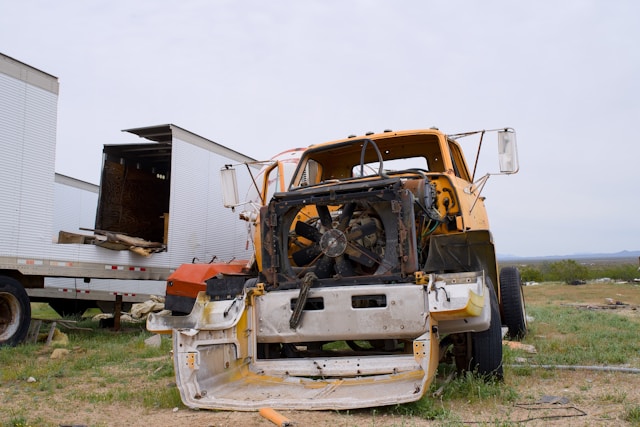
Florida's Gulf Coast is one of the most heavily trafficked corridors in the southeastern United States. From the port terminals of Tampa Bay to the resort communities stretching down to Naples, Interstate 75, U.S. Highway 41, and the Suncoast Parkway carry an enormous volume of commercial freight every single day. Eighteen-wheelers, flatbed haulers, tanker trucks, and refrigerated semis share these roads with millions of commuters, tourists, and families, and when something goes wrong, the consequences can be catastrophic.
If you or someone you love has been involved in a collision with a commercial truck on Florida's Gulf Coast, understanding how these cases work is the first step toward protecting your rights and pursuing the compensation you deserve.
Why 18-Wheeler Accidents Are Different From Ordinary Car Crashes
Most people assume that a truck accident case is simply a larger version of a standard car accident claim. In reality, the two are fundamentally different in almost every meaningful way, legally, medically, and financially.
The Scale of Destruction
A fully loaded commercial semi-truck can weigh up to 80,000 pounds under federal regulations. A typical passenger vehicle weighs somewhere between 3,000 and 4,500 pounds. When these two objects collide at highway speed, the disparity in mass creates forces that standard vehicle safety systems simply cannot absorb. Traumatic brain injuries, spinal cord damage, crush injuries, and internal organ trauma are common outcomes. Fatalities occur at a far higher rate than in passenger-vehicle-only crashes.
Multiple Parties May Be Liable
In a standard two-car accident, liability typically falls on one or both drivers. In a commercial trucking case, the web of potential liability is far more complex. Depending on the circumstances, responsible parties may include:
The truck driver, if fatigue, distraction, impairment, or reckless driving contributed to the crash
The trucking company, if it failed to properly vet, train, or supervise its drivers, or pressured drivers to violate hours-of-service rules
The cargo loading company, if improperly secured, the freight shifted and caused the driver to lose control
The truck manufacturer or parts supplier, if a mechanical defect, a failed brake system, a blowout caused by a defective tire, or a malfunctioning electronic stability system played a role
A maintenance contractor, if negligent, left a known safety hazard unaddressed
Identifying all liable parties is critical because it directly affects the total compensation available to an injured victim.
Federal Regulations Add a Layer of Complexity
Commercial trucking is governed by a dense body of federal law administered by the Federal Motor Carrier Safety Administration (FMCSA). These regulations cover everything from maximum driving hours and mandatory rest periods to drug and alcohol testing protocols, vehicle inspection requirements, and cargo securement standards. When a trucking company or driver violates these rules, that violation can serve as powerful evidence of negligence in a civil lawsuit.
Common Causes of Gulf Coast Truck Accidents
The Gulf Coast's unique geography and traffic patterns create specific risk factors that contribute to commercial truck collisions in this region.
Driver Fatigue on Long Interstate Hauls
Interstate 75, known locally as "Alligator Alley" in its southern stretch, is a primary artery for freight moving between Miami, Tampa, and points north. Long-haul drivers covering these routes often push against or beyond their legal driving limits, particularly when under pressure from dispatchers to meet tight delivery windows. Fatigued driving impairs reaction time and judgment in ways that are comparable to alcohol intoxication.
Distracted and Impaired Driving
Despite strict federal regulations requiring regular drug and alcohol testing for commercial drivers, impairment remains a contributing factor in a significant percentage of serious truck crashes. Distracted driving, including the use of mobile devices, GPS systems, and in-cab communication equipment, is equally dangerous at highway speeds.
Poor Weather and Road Conditions
Florida's Gulf Coast is subject to intense afternoon thunderstorms, tropical systems, and sudden fog events, particularly in low-lying areas near Tampa Bay and Charlotte Harbor. Wet roads dramatically reduce braking distances for heavy vehicles, and many truck drivers fail to adjust their speed appropriately for changing conditions.
Improper Cargo Loading
The Port of Tampa is one of the busiest ports in the southeastern United States, handling millions of tons of cargo annually. Freight that is improperly loaded, overweight, or inadequately secured can shift during transit, causing a driver to lose control, particularly during lane changes or emergency braking maneuvers on elevated sections of I-275 or the Courtney Campbell Causeway.
What to Do After a Truck Accident on the Gulf Coast
The steps you take in the hours and days following a commercial truck collision can have a significant impact on the strength of your legal claim.
Seek Medical Attention Immediately
Even if you feel relatively uninjured at the scene, seek a full medical evaluation as soon as possible. Many serious injuries, including traumatic brain injuries, internal bleeding, and soft tissue damage, do not produce obvious symptoms immediately after impact. A documented medical record created close in time to the accident is one of the most important pieces of evidence in a personal injury case.
Preserve Evidence at the Scene
If you are physically able to do so safely, document the scene. Photograph the vehicles, road conditions, skid marks, traffic signs, and any visible cargo. Collect contact information from witnesses. Note the trucking company's name and DOT number, which are typically displayed on the side of the cab.
Do Not Speak With the Trucking Company's Insurer
Commercial trucking companies and their insurers move quickly after a serious accident. Their goal is to minimize liability and settle claims for as little as possible. Adjusters may contact you within hours of the crash, often presenting themselves as helpful and sympathetic. Do not provide a recorded statement or accept any settlement offer before consulting with an attorney.
Retain Legal Counsel Promptly
Evidence in truck accident cases can disappear quickly. Electronic logging device (ELD) data, dashcam footage, and internal communications between drivers and dispatchers may be overwritten or destroyed within days unless a formal legal hold is issued. Retaining an attorney early ensures that a preservation demand is sent to the trucking company before critical evidence is lost.
For those in the Tampa Bay area, securing experienced truck accident legal representation in Tampa is one of the most important decisions an injured victim can make. The right legal team will know how to investigate the full chain of liability, preserve time-sensitive evidence, and build a case that accurately reflects the true scope of your losses.
Understanding Damages in a Florida Truck Accident Case
Florida law allows injured victims to pursue several categories of compensation following a serious truck accident.
Economic Damages
These are the quantifiable financial losses resulting from the crash, including:
Past and future medical expenses (hospitalization, surgery, rehabilitation, assistive devices)
Lost wages and diminished earning capacity
Property damage and vehicle replacement costs
Home modification costs if a disability requires structural changes
Non-Economic Damages
These damages compensate for losses that do not carry a specific dollar value but are nonetheless real and significant:
Physical pain and suffering
Emotional distress and psychological trauma
Loss of enjoyment of life
Loss of consortium for a surviving spouse or family member
Punitive Damages
In cases involving particularly egregious conduct, such as a trucking company that knowingly allowed an unqualified or impaired driver to operate a vehicle, Florida courts may award punitive damages as a way of punishing the defendant and deterring similar behavior in the future.
How Liability Is Established in a Gulf Coast Truck Accident Case
Building a successful truck accident claim requires a thorough investigation that goes well beyond the police report.
Reviewing the Driver's Record and Qualifications
FMCSA regulations require trucking companies to maintain detailed records on every driver they employ, including commercial driver's license history, prior violations, drug and alcohol test results, and training documentation. Attorneys can subpoena these records to determine whether the company exercised reasonable care in hiring and supervising the driver involved in your crash.
Analyzing Electronic Data
Modern commercial trucks are equipped with electronic logging devices, GPS tracking systems, and event data recorders that capture speed, braking patterns, steering inputs, and hours of service in the period leading up to a crash. This data can be decisive in establishing exactly what happened and whether federal safety regulations were violated.
Working With Accident Reconstruction Experts
In complex cases, attorneys often retain engineers and accident reconstruction specialists who can analyze physical evidence, vehicle damage patterns, and electronic data to produce a detailed account of how the collision occurred. This expert testimony can be critical in cases where the trucking company disputes liability.
For a deeper understanding of how trucking accident litigation works and what factors courts consider in assigning fault, resources like the trucking accident overview from Super Lawyers provide a useful foundation for injured victims beginning to navigate the legal process.
Choosing the Right Attorney for Your Case
Not every personal injury attorney has the experience or resources to handle a complex commercial trucking case. These cases require familiarity with FMCSA regulations, access to qualified expert witnesses, and the financial capacity to litigate against well-funded corporate defendants and their insurers.
When evaluating attorneys, look for a track record of results in truck accident and serious personal injury cases, a clear explanation of how fees are structured (most reputable firms handle these cases on a contingency basis, meaning you pay nothing unless you recover), and a willingness to take cases to trial if a fair settlement cannot be reached.
Attorneys with strong reputations in the Florida personal injury community, such as those recognized through peer-reviewed platforms like Marc Anidjar's profile on Justia, bring both the legal knowledge and the regional familiarity that Gulf Coast truck accident cases demand.
Final Thoughts
An 18-wheeler collision on Florida's Gulf Coast is not just a traffic incident; it is a life-altering event that can affect your health, your finances, and your family for years to come. The legal process that follows is complex, time-sensitive, and often adversarial. Trucking companies and their insurers have experienced legal teams working on their behalf from the moment a crash is reported.
You deserve the same level of preparation and advocacy. Understanding your rights, acting quickly to preserve evidence, and working with attorneys who know this area of law are the foundations of a strong claim and the best path toward the recovery and accountability you are entitled to pursue.