
Publishers
Science & Tech • Business • Investing & Finance
Home Accessibility Remodeling Roanoke VA: Aging in Place Solutions That Work
August 05, 2026
post photo preview

Home accessibility remodeling Roanoke VA homeowners invest in is increasingly recognized not as a reactive response to a mobility crisis but as proactive planning that allows people to remain in homes they love safely and comfortably as their physical needs change over time. The alternative — moving to a care facility or assisted living when the existing home becomes unmanageable — is more expensive, more disruptive, and less preferred by the vast majority of older adults than remaining in familiar surroundings with appropriate modifications. Getting those modifications right before they're urgently needed is what makes aging in place a genuine long-term option rather than a temporary workaround.

What Aging in Place Remodeling Actually Addresses

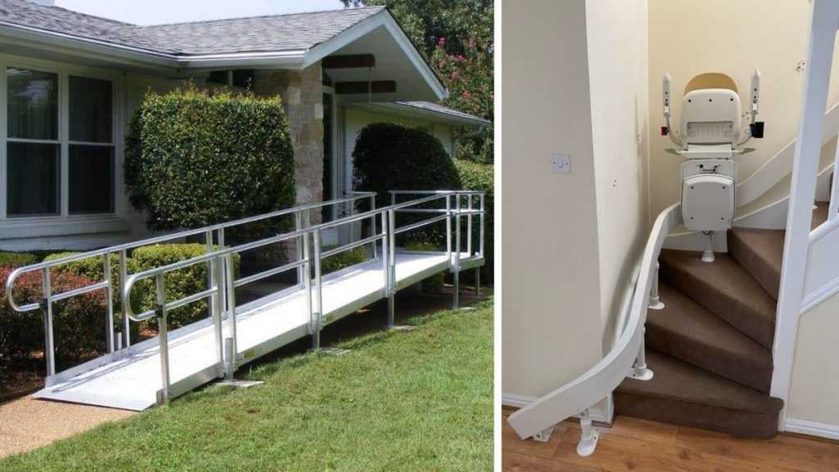
Aging in place modifications address the specific ways that homes designed for younger, fully mobile occupants create barriers for people whose mobility, strength, balance, or vision have changed. Stairs that were never a consideration become a significant barrier when knee or hip conditions make climbing painful or unsafe. Bathtubs that require stepping over a high threshold become fall risks for people whose balance isn't what it was. Doorways that are standard residential width become impassable for wheelchair or walker users. Light switches and electrical outlets at standard heights become difficult to reach for people with limited range of motion.

None of these barriers are design failures — they reflect how homes were built for a population that wasn't planning to age in them for decades. Home accessibility remodeling Roanoke VA projects address these barriers systematically rather than reactively, creating environments that work for the people living in them at their current stage of life rather than the stage the home was originally designed for.

Bathroom Modifications as the Highest Priority

Bathrooms are consistently the highest-priority space in aging in place remodeling because they combine the most significant fall risk with the most essential daily function. A bathroom fall for an older adult frequently produces injuries that are life-altering rather than minor — hip fractures, head injuries, and the subsequent loss of independence that often follows a serious bathroom fall are consequences that accessible bathroom design directly prevents.

The most impactful bathroom accessibility modifications include zero-threshold walk-in showers that eliminate the step-over barrier that standard tub-shower combinations create, grab bars at toilet and shower locations that provide the stability support that reduces fall risk during transfers and while standing, comfort-height toilets that reduce the distance of the sit-to-stand transfer, and non-slip flooring surfaces that maintain traction when wet. A bathroom remodel that addresses all of these elements simultaneously produces a bathroom that's both safer and more comfortable for daily use — not a clinical-looking medical environment but a genuinely well-designed space that happens to meet accessibility requirements.

Doorway and Circulation Modifications

Standard residential doorways — typically 32 inches of clear opening — don't accommodate wheelchairs or most walkers without contact at the doorframe, which creates both practical difficulty and the kind of daily friction that makes moving through the home exhausting rather than natural. ADA-compliant doorway width of 36 inches clear opening accommodates wheelchair access comfortably and makes using a walker significantly easier for people who need one.

Widening doorways is a more involved modification than many homeowners expect — it typically requires structural assessment to determine whether the wall framing can accommodate the wider opening without additional support, and it may require relocating electrical components within the wall being modified. Working with a construction roanoke team that understands both the structural and finish requirements of doorway widening produces results that look intentional rather than patched.

Kitchen Accessibility Modifications

Kitchen accessibility modifications address the specific challenges that cooking and meal preparation create for people with mobility limitations. Counter heights that are fixed at standard 36 inches become difficult to use from a seated position — adjustable-height counters or lower counters at key work areas accommodate both standing and seated use. Cabinet hardware that requires gripping and turning becomes inaccessible for people with limited hand strength or arthritis — lever-style pulls that can be operated with a closed fist are a simple substitution that makes a significant functional difference.

Appliance placement matters as well — a wall oven positioned at counter height rather than floor level eliminates the bending that becomes painful or unsafe for people with back or balance issues. These modifications don't require a complete kitchen remodel Roanoke VA — many can be incorporated into a targeted accessibility renovation that addresses specific barriers without replacing everything that's working well.
Planning Accessibility Into Broader Remodeling Projects

The most cost-effective time to incorporate accessibility modifications is during broader remodeling projects that are already planned — when walls are open, plumbing is being moved, or flooring is being replaced. Adding blocking inside walls for future grab bar installation during a bathroom renovation costs very little but eliminates the need to open walls later when the grab bars are actually needed. Specifying no-threshold shower pans during a bathroom renovation rather than a standard tub-shower saves the cost of conversion later.

Home remodeling projects that incorporate future accessibility considerations from the planning stage produce homes that are ready for the changes that aging brings rather than requiring expensive reactive modifications when those changes arrive.


community logo
Join the Publishers Community
To read more articles like this, sign up and join my community today
0
What else you may like…
Posts
Articles
How to Compare Online Options for Daily Tadalafil

Why Are Employers Considering Daily Tadalafil Online?

The question of how to compare online options for daily tadalafil matters to employers evaluating confidential access to erectile dysfunction care. This guide explains what HR teams should review, including clinical oversight, privacy, pharmacy fulfillment, employee choice, and total program cost.

A typical service begins with a digital health questionnaire or intake. A licensed clinician reviews the information and decides whether prescribing is appropriate. If approved, a pharmacy fulfills the prescription and ships it to the employee’s home. This process may reduce scheduling friction, limit unnecessary workplace disclosures, and give employees a clearer path through a sensitive care decision.

For HR teams, the central question is access and administration. Employers should not imply that daily tadalafil is suitable for every employee, replace individualized medical assessment with benefit design, or promote one treatment as the expected choice. The company should also understand ...

Prescription-Strength Hair Removal Creams: What to Compare Before You Buy

How does prescription hair removal cream work?

Prescription hair removal cream usually contains eflornithine, a topical medication that slows the growth of unwanted facial hair. It does not dissolve or pull out visible hair when applied, so you still need your usual removal method, such as shaving, plucking, waxing, or a professional procedure.

Eflornithine works by inhibiting ornithine decarboxylase, an enzyme involved in the growth and development of cells within the hair follicle. By affecting this process, the cream can reduce the rate at which facial hair grows. This differs from depilatory creams, which are formulated to break down the hair shaft and produce short-term removal.

The results are gradual rather than immediate. Some people may notice improvement after several weeks, but the cream is not intended to create instant smoothness or replace every hair-removal session. You may need to continue your chosen method while using it.

Eflornithine also does not permanently disable hair follicles. If treatment stops, ...

A Buyer’s Guide to Oral GLP-1 Products: What to Evaluate Before Choosing One

What exactly are GLP-1 drops?

“GLP-1 drops” is a consumer-facing label for liquid or sublingual products marketed to support weight loss. The term does not identify a single drug, standardized dose, or FDA-approved treatment, so employers should evaluate the specific product rather than the label.

Before comparing a drops program with an approved injectable or oral GLP-1 medication, request the active ingredient, concentration, dose, administration route, formulation, prescriber, dispensing pharmacy, and intended use. These details determine what employees are actually receiving and whether the product has a documented clinical basis.

A liquid or sublingual product should not be assumed to be interchangeable with an approved medicine. The FDA states that compounded drugs are not reviewed for safety, effectiveness, or quality before marketing and has warned against describing compounded GLP-1 products as generic equivalents of approved medicines or claiming identical clinical results, according to the agency ...

post photo preview
The Human Reality Behind Factory Scaling in 2026

Photo:Vietnam Real Estate

If you turn on any financial news network or skim industry newsletters, you will hear a relentless drumbeat about industrial scale. Executives talk about expanding capacity, opening new assembly hubs, and accelerating production timelines to capture surging demand. On paper, it sounds like a glorious era of manufacturing growth.

Step through the security gates of an active plant, however, and you quickly realize that scaling a factory in 2026 is rarely a software setting you simply dial up. It is a deeply human puzzle.

When an industrial operation expands, every existing operational crack suddenly widens into a canyon. Pushing a plant to produce twice as fast does not automatically make the workforce twice as fast. In fact, if the foundation of how people learn and perform their jobs is flawed, forcing speed onto the floor usually leads to one guaranteed outcome: immediate, compounding friction.

The Myth of the Plug and Play Worker

There is a persistent fantasy in boardrooms that you can hire a group of new technicians, run them through a brief onboarding orientation, and hand them a station assignment with total confidence.

The reality on the line is much more unforgiving.

For decades, manufacturing relied on an invisible safety net. When official documentation was confusing or incomplete, veteran operators filled in the blanks. They knew the quirks of specific machines, the exact feel of a tight fit, and the unwritten shortcuts that kept assembly lines moving. That shared wisdom was the real engine keeping quality high.

Now, as a massive wave of experienced makers reaches retirement age, that safety net is disappearing. Plants are onboarding thousands of newer workers into increasingly complex environments. These incoming operators are capable, eager, and digitally skilled, yet we routinely hand them static paper binders, dense text files, or flat screenshots to guide intricate physical builds.

When a worker has to stop every few minutes to decode a confusing diagram or figure out if a part design was updated yesterday, line velocity dies a slow death. Expecting people to execute complex tasks flawlessly while giving them flat, outdated tools is not a workforce problem. It is an information delivery failure.

Rethinking How Knowledge Flows to the Floor

To scale cleanly, organizations have to stop treating execution guidance as an administrative afterthought. This is where the perspective needs to fundamentally shift from collecting mountain loads of operational data to making knowledge immediately usable for the person holding the tools.

Garth Coleman, the Chief Executive Officer of Canvas Envision, has been pointing directly at this structural blind spot. His view is that while modern industrial companies spend massive fortunes connecting their enterprise systems and cloud databases, they routinely abandon the digital thread at the most critical juncture: the frontline workstation.

The traditional authoring cycle for work instructions has historically been a massive drag on operations. Manufacturing engineers used to spend endless hours taking manual screenshots, converting complex engineering files into static pages, and writing lengthy descriptions. Because creating documentation was so painful, instructions rarely kept pace with daily engineering changes.

When you remove that authoring bottleneck and replace lifeless documents with interactive, visual guidance, the entire dynamic on the shop floor changes.

Instead of reading through pages of abstract instructions, operators can interact directly with dynamic three dimensional representations of what they are assembling. They can rotate parts, inspect spatial relationships, and see exactly how components fit together in real time. The mental strain of interpreting flat paperwork vanishes, replaced by the spatial clarity needed to build with speed and confidence.

Building Confidence At the Point of Work

Scaling an operation is ultimately an exercise in human confidence. When an operator feels uncertain about a step, they hesitate. That hesitation, multiplied across hundreds of workstations and thousands of shifts, is what creates operational bottlenecks.

When new hires walk onto a floor equipped with clear visual guidance, their learning curve collapses from months down to days. They do not have to guess or wait for a busy supervisor to clarify an ambiguous drawing. They have the wisdom of the engineering team and veteran builders delivered straight to their screen at the exact moment of execution.

This approach transforms the workforce experience. It treats the operator with respect, eliminating the mental clutter and frustration that leads to fatigue, quality errors, and high turnover. A confident workforce is naturally an efficient workforce.

The Real Driver of Industrial Scale

The current race for manufacturing scale will not be won by whoever buys the most equipment or announces the biggest expansion plans. It will be won by the companies that realize their most valuable asset is the human being standing at the workbench.

As we navigate the industrial landscape of 2026, real progress requires us to clean up old documentation habits. By taking complex engineering designs and turning them into visual, interactive execution guides, manufacturers can bridge the gap between design and physical reality.

When you give frontline workers the tools they need to succeed, scale takes care of itself. It is time to move past the era of static binders and build a shop floor experience that reflects the true ambition of modern industry.

Read full Article
post photo preview
International Estate Planning in the Netherlands: What Expats Need to Know

International estate planning Netherlands expats navigate is one of the most complex and most consistently deferred areas of legal planning for Americans living in the Netherlands — deferred because it doesn’t feel urgent until it suddenly is, and complex because the interaction between Dutch succession law, EU succession regulations, American estate law, and the specific asset profile of someone who has lived and worked in multiple countries creates a planning challenge that no single jurisdiction’s standard estate planning framework fully addresses. Understanding what the key issues are and what decisions need to be made is what allows expats to approach this planning proactively rather than leaving it to be resolved by surviving family members under the worst possible circumstances.

The EU Succession Regulation and Why It Matters

The starting point for international estate planning in the Netherlands for American expats is the EU Succession Regulation — an EU-wide rule that determines which country’s law governs the succession of a deceased person’s estate when the death involves multiple EU member states. Under the regulation the default rule is that the law of the country of habitual residence at the time of death governs succession — which for an American living in the Netherlands means Dutch succession law would apply by default.

The regulation allows individuals to make an explicit choice of the law of their nationality to govern their succession — which means an American expat can elect that their estate is governed by the law of their American state of domicile rather than Dutch law. Whether making that election is advantageous depends on a comparison of what Dutch succession law provides versus what the applicable American state law provides for the specific person’s family situation and asset profile — which requires legal analysis rather than a blanket recommendation either direction.

Dutch Forced Heirship and Its Implications

One of the most significant differences between Dutch succession law and American estate law is the Dutch forced heirship provision — the legitieme portie — that entitles children of the deceased to a minimum share of the estate regardless of what the will says. Under Dutch law, children who are disinherited or whose share under the will is less than the forced share can claim their legitieme portie from the estate — which limits testamentary freedom in ways that American estate planning doesn’t encounter.

For American expats who want to leave their estate in a specific way that Dutch forced heirship would override — leaving everything to a surviving spouse, making unequal distributions among children, or directing assets to charitable beneficiaries — understanding whether and how the forced heirship provisions apply to their specific situation, and whether electing the law of their American nationality would avoid them, is a foundational estate planning question that family law expertise in Dutch succession law addresses directly.

Assets in Multiple Countries

The practical complexity of international estate planning for Netherlands-based expats typically involves assets in both the Netherlands and the United States — Dutch real estate, Dutch pension and retirement accounts, Dutch bank accounts, and Dutch business interests alongside American retirement accounts, American real estate, American financial accounts, and American business interests. Each category of asset may be subject to different legal frameworks, different tax treatment, and different probate or administration requirements depending on where the asset is located.

Dutch real estate passes through Dutch succession procedures regardless of where the deceased was domiciled or what nationality law election was made — the law of the situs governs real property succession in virtually all international estate contexts. American retirement accounts like IRAs and 401(k)s pass by beneficiary designation outside of the will and outside of probate, which means the estate plan needs to coordinate the will’s provisions with the beneficiary designations on retirement accounts rather than assuming the will controls everything.

Tax Considerations in Dutch-American Estate Planning

Dutch inheritance tax — erfbelasting — applies to inheritances received by Dutch residents and to Dutch-situated assets inherited by non-residents, at rates that vary by the relationship between the deceased and the beneficiary. The Netherlands and the United States don’t have an estate and inheritance tax treaty, which means assets can potentially be subject to both American estate tax and Dutch inheritance tax without a treaty mechanism to eliminate the double taxation.

The international corporate lawyers and family law practitioners who handle cross-border estate planning for Netherlands-based expats work with tax advisors in both jurisdictions to structure planning that minimizes the double taxation exposure while meeting the legal requirements of both systems — which requires coordinated advice rather than advice from either jurisdiction in isolation.

Making a Will That Works in Both Countries

The practical output of international estate planning for a Netherlands-based American expat is typically a will — or coordinated wills in both countries — that is valid under Dutch law, that makes the appropriate nationality law election if that election is advantageous, that coordinates with American assets and beneficiary designations, and that gives the executor or personal representative the authority and the guidance to administer an estate that spans two legal systems. A will drafted by an American attorney without Dutch law input may not achieve the intended results in the Netherlands, and vice versa — which is why the coordination between legal advisors in both jurisdictions is as important as the quality of the advice in either one.

Read full Article
post photo preview
Expanding Acute Bed Access Without Building Expensive New Facilities

Photo:Tima Miroshnichenko

Modern healthcare infrastructure faces an acute physical boundary. Across the country, and particularly throughout dense urban centers, health systems are running out of physical space. Hospital lobbies remain continuously congested, hallway boarding in emergency departments has become an accepted operational reality, and the staggering financial costs of traditional real estate expansion make constructing new hospital towers an increasingly impractical solution for cities needing immediate capacity relief.

Building a single new inpatient hospital bed today requires millions of dollars in capital expenditure, years of regulatory approvals, and extensive community planning. Yet the underlying demand for high-acuity care continues to climb. To break this logjam, healthcare leaders are turning away from heavy construction projects and focusing instead on a far more flexible asset that already exists in every community: the patient’s living room. By pairing mobile, hands-on field clinicians with remote emergency and hospitalist physicians, health networks are effectively expanding acute bed capacity overnight without laying a single brick.

The Myth of the Physical Hospital Bed

For decades, the healthcare sector operated under a foundational assumption: delivering serious, high-acuity medical treatment required placing a patient inside a dedicated facility room. If someone needed intravenous antibiotics, continuous vital monitoring, or rapid laboratory diagnostics, the default destination was a hospital bed.

However, as urban hospitals reach full capacity, this facility-first mindset has created an unsustainable bottleneck. When an emergency department cannot transfer admitted patients to inpatient floors because every room is occupied, those patients end up boarded on hallway stretchers for 20 hours or more. The physical building itself becomes the primary constraint on care delivery.

The reality is that a hospital bed is not defined by four concrete walls, a hallway light, or a shared room in a medical center. A hospital bed is a set of clinical capabilities. It is the combination of rapid diagnostic testing, immediate therapeutic administration, continuous clinical monitoring, and expert physician oversight. When those capabilities are mobilized and brought directly to a patient’s bedside at home, the living room functions as a fully capable acute care setting.

Decentralizing acute care transforms how health systems manage overall capacity. Instead of viewing bed access as a fixed physical footprint tied to a specific address, care networks can scale their capacity dynamically based on community demand, using mobile infrastructure to treat patients where they are most comfortable.

The Dual-Provider Architecture: Hands-On Execution Meets Virtual Precision

Safely managing complex acute conditions outside a traditional facility requires more than sending a lone clinician with a basic medical kit. It relies on a seamless dual-provider care framework that replicates the multidisciplinary team found inside a hospital bay.

Under this model, a skilled field clinician (such as a paramedic, nurse practitioner, or physician assistant) arrives directly at the patient’s front door within hours of a referral. They arrive equipped with hospital-grade diagnostic and therapeutic tools, including handheld blood chemistry analyzers, rapid molecular PCR testing panels, portable digital imaging, oxygen delivery systems, and intravenous medications.

Simultaneously, a board-certified emergency physician or hospitalist joins the clinical encounter virtually via a secure video interface. The remote physician evaluates the patient in real time, reviews diagnostic lab data as it generates at the bedside, conducts a comprehensive clinical assessment, and directs the overall care plan alongside the in-person clinician.

This collaborative dynamic ensures complete clinical rigor. The field clinician provides the hands-on physical exam, sets up intravenous access, runs diagnostic tests, and administers required medications. The remote physician brings expert diagnostic reasoning, complex case management, and immediate medical decision-making.

Together, this dual-provider approach gives the patient the exact same level of physician-led, acute medical oversight they would receive inside a hospital ward, but without forcing them to endure hours of waiting in a crowded emergency department lobby.

A Practical Solution for High-Acuity Conditions

One of the largest misconceptions surrounding home-based care is that it is only suitable for minor illnesses or basic post-surgical check-ins. In practice, mobile acute care networks routinely manage serious, high-acuity conditions that traditionally trigger a multi-day hospital admission.

Patients experiencing acute flare-ups of congestive heart failure, severe exacerbations of chronic obstructive pulmonary disease, complicated skin infections like cellulitis, pneumonia, or profound dehydration from gastrointestinal illness can be treated safely in their living rooms.

Lon Hecht, CEO of Care2U, has consistently highlighted how shifting these specific acute cases into the home directly addresses the broader hospital capacity crisis. When a health system provides hospital-level care in the home, it accomplishes two critical operational goals at once: it delivers a safer, more comfortable experience for the patient while immediately freeing up an inpatient bed for someone suffering from a major trauma, acute stroke, or surgical emergency that genuinely requires centralized hospital infrastructure.

When a patient recovers in their own bed, they remain completely isolated from hospital-acquired infections, maintain their personal daily routines, and avoid the physical disorientation and delirium that so often affect older adults in noisy hospital wards. If a symptom change occurs after the initial visit, the mobile clinical team can return to the bedside within hours, keeping minor setbacks from escalating into an unnecessary trip back to the emergency room.

Economic Sustainability and the Path Forward

Beyond expanding physical capacity, shifting acute care into the home provides immediate economic relief for both healthcare providers and health insurance plans.

Running a physical hospital bed is an extraordinarily expensive endeavor, driven by massive facility overhead, continuous utility costs, and complex administrative operations. Delivering an equivalent acute care episode in the home eliminates those heavy real estate overhead expenses, reducing the overall cost of care by up to two-thirds compared to a traditional inpatient stay.

Furthermore, home-based acute care prevents the expensive downstream complications that so often follow a long hospital admission, such as readmissions, functional mobility loss, and extended stays in skilled nursing facilities. By interrupting this costly chain of events at the very beginning, health plans and health systems preserve valuable financial resources while delivering better clinical outcomes.

To make home-based acute care the default standard across the nation, payment structures must continue to adapt. While commercial insurers and Medicare Advantage plans are increasingly embracing purpose-built contracting pathways for acute home care, establishing standardized, universal reimbursement models will allow these programs to scale rapidly.

Unlocking living room capacity is not merely a temporary fix for overcrowded hospitals; it is the natural evolution of modern healthcare delivery. By leveraging mobile clinical teams, point-of-care diagnostics, and virtual physician oversight, we can build a resilient, decentralized healthcare system that expands capacity on demand, lowers overall costs, and delivers world-class medical care right where patients feel safest: at home.

Read full Article
Available on mobile and TV devices
google store google store app store app store
google store google store app tv store app tv store amazon store amazon store roku store roku store
Powered by Locals