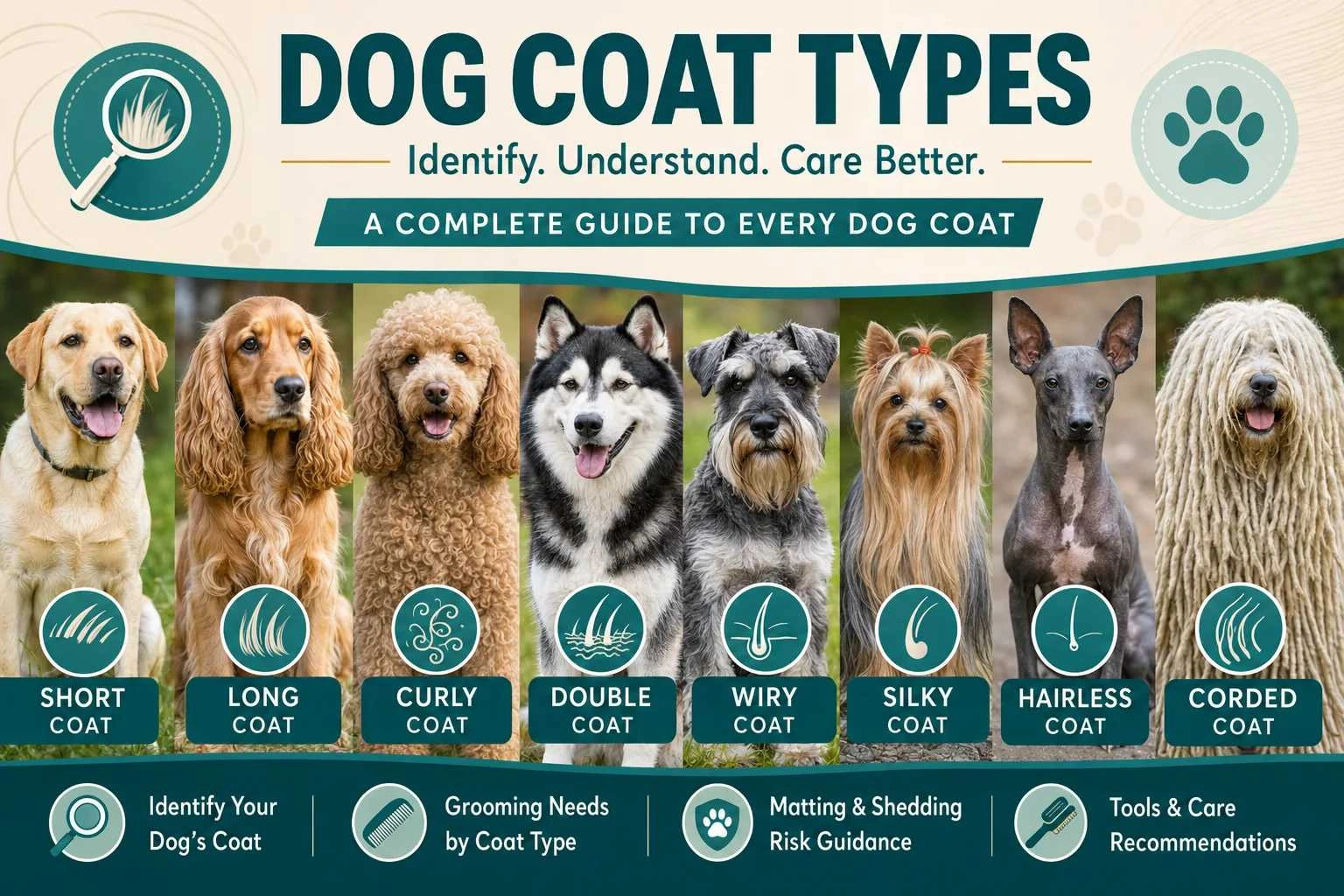
Dog coat types grooming needs are one of the least understood parts of caring for a pet. Two dogs of the same size can have completely different coats, and the care that keeps one looking and feeling good can be wrong for the other. A short, smooth coat may need little more than a weekly brushing, while a curly coat can tangle within days without regular attention. Knowing what kind of coat a dog has helps owners set realistic expectations, choose the right tools, and plan professional visits at sensible intervals.
Why Coat Type Matters
A dog’s coat does more than determine appearance. It helps regulate temperature, protects the skin, and sheds dirt and moisture. When a coat is cared for properly, the skin underneath tends to stay healthier. When it is neglected, problems such as mats, skin irritation, trapped moisture, and hidden parasites can develop. Matted fur can pull on the skin and be painful, and in severe cases it may need to be shaved off.
Coat type also affects how much a dog sheds, how often it needs bathing, and how well it tolerates heat and cold. These factors all shape a grooming routine.
Smooth and Short Coats
Dogs with smooth, short coats, such as Boxers, Beagles, and Dobermans, are often considered low maintenance. Their coats lie close to the body and shed moderately year-round. Regular brushing with a rubber curry or soft bristle brush removes loose hair and distributes natural oils. Bathing is needed only when the dog is dirty or smells, and professional visits can be spaced further apart.
Low maintenance does not mean no maintenance. Short coats can still shed heavily, and the skin, ears, and nails need regular attention. Some short-coated dogs also have sensitive skin that benefits from a gentle shampoo.
Double Coats
Double-coated breeds, including Huskies, Golden Retrievers, German Shepherds, and Labrador Retrievers, have a soft, dense undercoat beneath a layer of longer guard hairs. The undercoat insulates the dog and is shed heavily, often twice a year, during what owners describe as blowing coat. During these periods, loose undercoat can come out in large amounts.
Regular brushing with an undercoat rake or slicker brush helps remove dead hair and reduces the amount of fur that ends up around the house. Professional deshedding treatments can be particularly useful during seasonal shedding. A common question is whether double coats should be shaved in summer. Many groomers and veterinarians advise against it in most cases, because the coat helps protect the dog from both heat and sun, and shaving can change how the coat grows back. Thorough brushing and removal of loose undercoat is usually a better approach, though the right choice depends on the dog.
Long and Silky Coats
Breeds such as Yorkshire Terriers, Shih Tzus, Maltese, and Afghan Hounds have long, fine, silky hair that can look elegant but tangles easily. These coats often need daily brushing to prevent mats, especially behind the ears, under the legs, and around the collar. Many owners choose a shorter trim to make home care more manageable.
Regular professional grooming, often every four to six weeks, keeps these coats healthy and gives groomers a chance to catch problems early. Between visits, a good comb and a leave-in conditioner can help.
Curly and Wool Coats
Poodles, Bichon Frises, and many doodle mixes have curly or wooly coats that shed little but tangle readily. Since the hair keeps growing and does not fall out as easily, loose hairs get caught in the curls and can form dense mats close to the skin. These coats typically need frequent brushing, thorough combing down to the skin, and regular professional trims, commonly every four to eight weeks.
Doodle mixes can be especially unpredictable, since a puppy’s coat may change as it matures. A soft puppy coat often becomes denser and more tangle-prone, and owners are sometimes surprised by the increase in upkeep. Early introduction to grooming helps the dog learn to stay calm during the process.
Wire and Rough Coats
Terriers such as Schnauzers, Scottish Terriers, and Airedales often have wiry coats that can be hand-stripped or clipped. Hand-stripping removes dead hair by hand and helps maintain the coat’s texture and color, while clipping is easier but can soften the coat over time. These dogs need regular grooming, including attention to the beard, legs, and face.
Hairless and Special Cases
Hairless breeds still need skin care. Their skin can be prone to dryness, acne, and sunburn, and they may need gentle cleansing and sun protection. Dogs with skin conditions, allergies, or health concerns may need special shampoos or modified routines, and a veterinarian can offer guidance.
Building a Grooming Routine
A well-planned routine combines at-home care with professional visits. Brushing frequency, bathing schedule, nail trims, ear cleaning, and dental care all fit into the plan. Professional dog grooming can be matched to the dog’s coat, lifestyle, and comfort level. Dogs that spend time at dog daycare or stay for dog boarding may pick up dirt or tangles from active play, so scheduling a groom around those activities helps keep the coat in good condition.