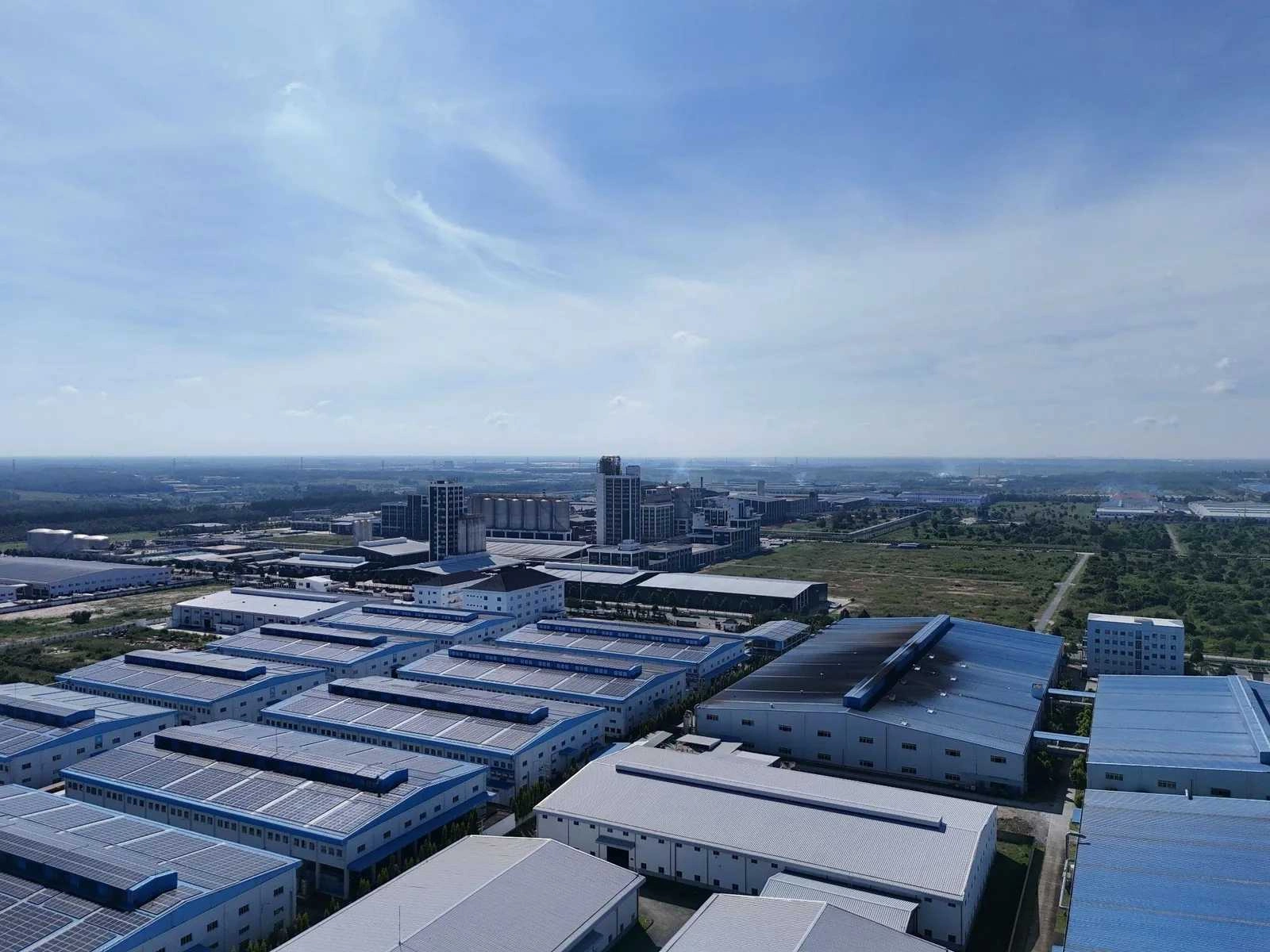
Photo:Vietnam Real Estate
If you turn on any financial news network or skim industry newsletters, you will hear a relentless drumbeat about industrial scale. Executives talk about expanding capacity, opening new assembly hubs, and accelerating production timelines to capture surging demand. On paper, it sounds like a glorious era of manufacturing growth.
Step through the security gates of an active plant, however, and you quickly realize that scaling a factory in 2026 is rarely a software setting you simply dial up. It is a deeply human puzzle.
When an industrial operation expands, every existing operational crack suddenly widens into a canyon. Pushing a plant to produce twice as fast does not automatically make the workforce twice as fast. In fact, if the foundation of how people learn and perform their jobs is flawed, forcing speed onto the floor usually leads to one guaranteed outcome: immediate, compounding friction.
The Myth of the Plug and Play Worker
There is a persistent fantasy in boardrooms that you can hire a group of new technicians, run them through a brief onboarding orientation, and hand them a station assignment with total confidence.
The reality on the line is much more unforgiving.
For decades, manufacturing relied on an invisible safety net. When official documentation was confusing or incomplete, veteran operators filled in the blanks. They knew the quirks of specific machines, the exact feel of a tight fit, and the unwritten shortcuts that kept assembly lines moving. That shared wisdom was the real engine keeping quality high.
Now, as a massive wave of experienced makers reaches retirement age, that safety net is disappearing. Plants are onboarding thousands of newer workers into increasingly complex environments. These incoming operators are capable, eager, and digitally skilled, yet we routinely hand them static paper binders, dense text files, or flat screenshots to guide intricate physical builds.
When a worker has to stop every few minutes to decode a confusing diagram or figure out if a part design was updated yesterday, line velocity dies a slow death. Expecting people to execute complex tasks flawlessly while giving them flat, outdated tools is not a workforce problem. It is an information delivery failure.
Rethinking How Knowledge Flows to the Floor
To scale cleanly, organizations have to stop treating execution guidance as an administrative afterthought. This is where the perspective needs to fundamentally shift from collecting mountain loads of operational data to making knowledge immediately usable for the person holding the tools.
Garth Coleman, the Chief Executive Officer of Canvas Envision, has been pointing directly at this structural blind spot. His view is that while modern industrial companies spend massive fortunes connecting their enterprise systems and cloud databases, they routinely abandon the digital thread at the most critical juncture: the frontline workstation.
The traditional authoring cycle for work instructions has historically been a massive drag on operations. Manufacturing engineers used to spend endless hours taking manual screenshots, converting complex engineering files into static pages, and writing lengthy descriptions. Because creating documentation was so painful, instructions rarely kept pace with daily engineering changes.
When you remove that authoring bottleneck and replace lifeless documents with interactive, visual guidance, the entire dynamic on the shop floor changes.
Instead of reading through pages of abstract instructions, operators can interact directly with dynamic three dimensional representations of what they are assembling. They can rotate parts, inspect spatial relationships, and see exactly how components fit together in real time. The mental strain of interpreting flat paperwork vanishes, replaced by the spatial clarity needed to build with speed and confidence.
Building Confidence At the Point of Work
Scaling an operation is ultimately an exercise in human confidence. When an operator feels uncertain about a step, they hesitate. That hesitation, multiplied across hundreds of workstations and thousands of shifts, is what creates operational bottlenecks.
When new hires walk onto a floor equipped with clear visual guidance, their learning curve collapses from months down to days. They do not have to guess or wait for a busy supervisor to clarify an ambiguous drawing. They have the wisdom of the engineering team and veteran builders delivered straight to their screen at the exact moment of execution.
This approach transforms the workforce experience. It treats the operator with respect, eliminating the mental clutter and frustration that leads to fatigue, quality errors, and high turnover. A confident workforce is naturally an efficient workforce.
The Real Driver of Industrial Scale
The current race for manufacturing scale will not be won by whoever buys the most equipment or announces the biggest expansion plans. It will be won by the companies that realize their most valuable asset is the human being standing at the workbench.
As we navigate the industrial landscape of 2026, real progress requires us to clean up old documentation habits. By taking complex engineering designs and turning them into visual, interactive execution guides, manufacturers can bridge the gap between design and physical reality.
When you give frontline workers the tools they need to succeed, scale takes care of itself. It is time to move past the era of static binders and build a shop floor experience that reflects the true ambition of modern industry.