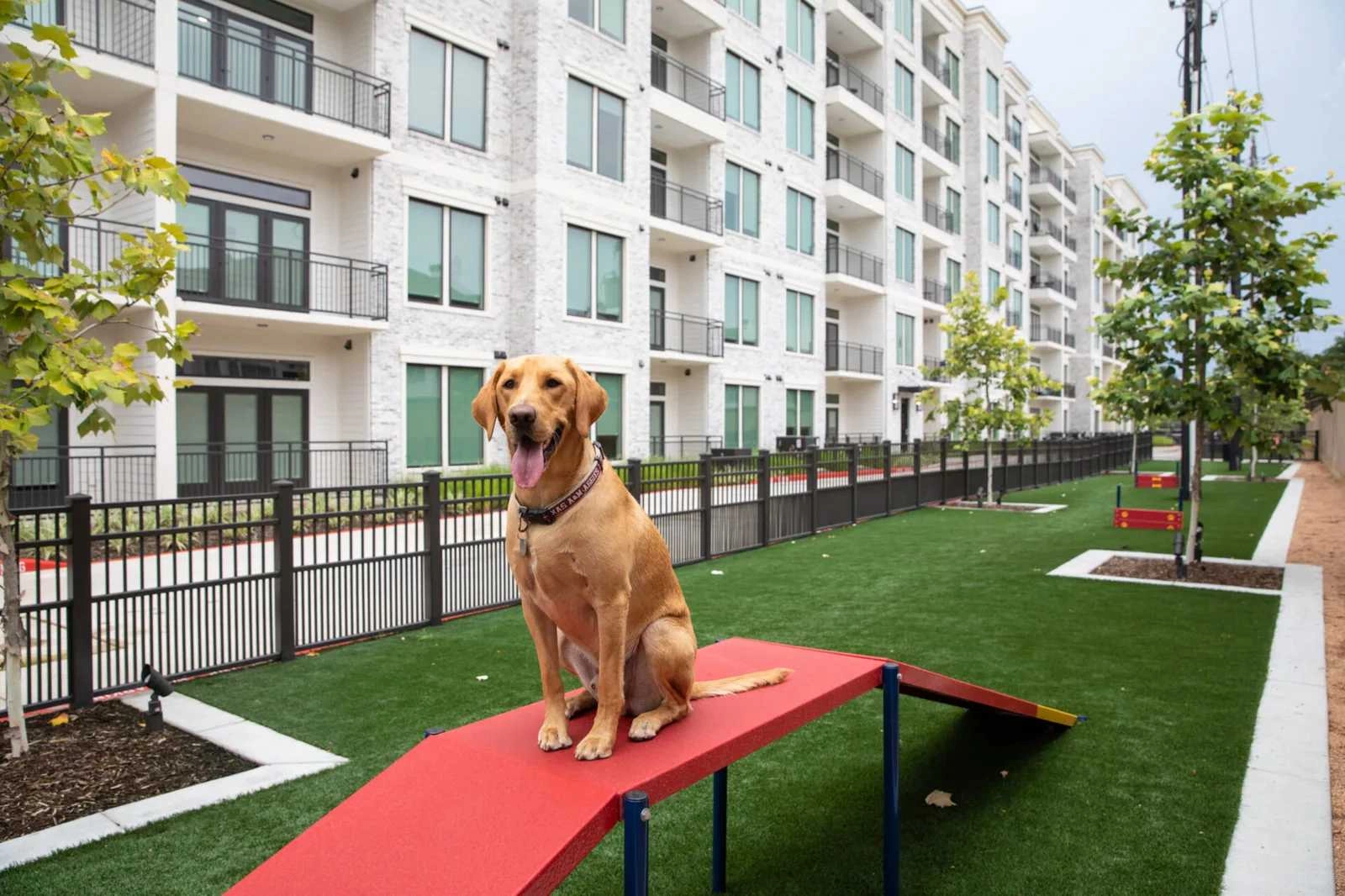
Dog park equipment apartment complex and urban residential property managers install has moved from a nice-to-have amenity to a genuine competitive differentiator in markets where pet-owning renters represent a significant and growing portion of the tenant pool. With pet ownership rates consistently above sixty percent in most American markets and urban renters among the most likely to own dogs, a well-designed on-site dog park with quality equipment directly affects lease-up rates, tenant retention, and the ability to command premium rents relative to comparable properties without the amenity. Understanding what distinguishes a dog park that delivers those returns from one that sits underused and deteriorates is what allows property managers and developers to make investment decisions that actually pay off.
Why the Quality of the Dog Park Matters as Much as Its Existence
The presence of a dog park on a property listing checks a box that attracts initial inquiries from pet-owning prospective tenants. The quality of that dog park — whether it's actually well-designed, properly equipped, and maintained — is what converts those inquiries into leases and what retains tenants at renewal time. A dog park that's a small patch of grass with a single piece of consumer-grade equipment that's already showing wear doesn't deliver the amenity value that the listing implies, and tenants who discover that gap between expectation and reality don't forget it when renewal conversations happen.
The dog parks that generate the most positive tenant feedback — and that show up in online reviews as genuine property strengths — are those where the equipment is clearly commercial grade, where the space is thoughtfully designed for how dogs and owners actually use it, and where the amenity is maintained with the same attention given to other property common areas. That combination communicates that the property takes its pet-friendly positioning seriously rather than treating it as a marketing claim with minimal follow-through.
Space Constraints and How Modular Equipment Addresses Them
Urban apartment properties rarely have the generous square footage that suburban community dog parks enjoy — which makes equipment selection and space planning more consequential rather than less. Equipment that's sized and configured for the available footprint, that doesn't create sight line problems for the staff supervision that urban properties often provide, and that makes efficient use of limited square footage through vertical elements rather than only horizontal spread produces a more functional dog park in a constrained space than equipment selected without those considerations.
Modular systems that can be configured to fit the specific dimensions and shape of the available area are particularly valuable in urban residential applications. The PRO Series Modular systems' reconfigurability allows property managers to optimize the layout for their specific space rather than working around fixed equipment configurations designed for larger areas. For properties with distinctly small or oddly shaped dog park areas, this flexibility is the difference between equipment that fits well and equipment that creates the awkward circulation and supervision problems that make a dog park less usable than its size suggests it should be.
Size Separation in Apartment Dog Parks
The case for separating large and small dog areas is even stronger in apartment dog parks than in suburban community parks — because urban apartment dogs skew significantly toward smaller breeds, and the density of use in a well-utilized urban dog park creates more frequent mixed-size interactions than a less-used suburban park would. A small dog that has a negative experience with a large dog in the shared dog park area of its home building has that experience every time it visits the amenity — which quickly makes the dog park feel unsafe rather than beneficial for that tenant.
Purpose-designed equipment for small dogs — appropriately scaled structures from the Mini Series — gives small breed dogs a space that's genuinely designed for them rather than a scaled-down version of large dog equipment. For apartment properties where small breeds predominate, this investment signals genuine attention to what small dog owners actually need rather than a generic dog-friendly gesture.
Durability and Maintenance in High-Density Use Environments
Apartment dog parks in urban residential buildings face more concentrated daily use than most other dog park contexts — a building with two hundred pet-owning units generates consistent daily traffic that a suburban park serving a larger but more dispersed population doesn't experience in the same concentrated way. Equipment that holds up to that concentrated use, that can be cleaned and maintained efficiently by property maintenance staff, and that doesn't develop safety or appearance problems quickly under high-frequency use is the only equipment that makes economic sense for this application.
Durable dog play accessories built to commercial standards provide the material durability that high-density residential use requires — non-porous surfaces that clean efficiently, UV-stabilized materials that maintain appearance through outdoor exposure, and structural integrity that doesn't degrade under the daily load that apartment building traffic generates.
The Lease-Up and Retention Math
The financial case for investing in quality dog park equipment for apartment complexes is straightforward when the numbers are evaluated honestly. A single additional month of occupancy from improved tenant retention across a property pays for quality equipment many times over. Premium rent positioning relative to comparable non-pet-friendly or lower-quality-amenity properties produces recurring monthly revenue that compounds across the lease term. And reduced vacancy from faster lease-up in a market where pet-owning tenants have limited quality options adds directly to the property's annual revenue performance.
Dog exercise equipment that contributes meaningfully to those outcomes through a genuinely high-quality amenity experience is infrastructure investment with a clear return — not a cost center.