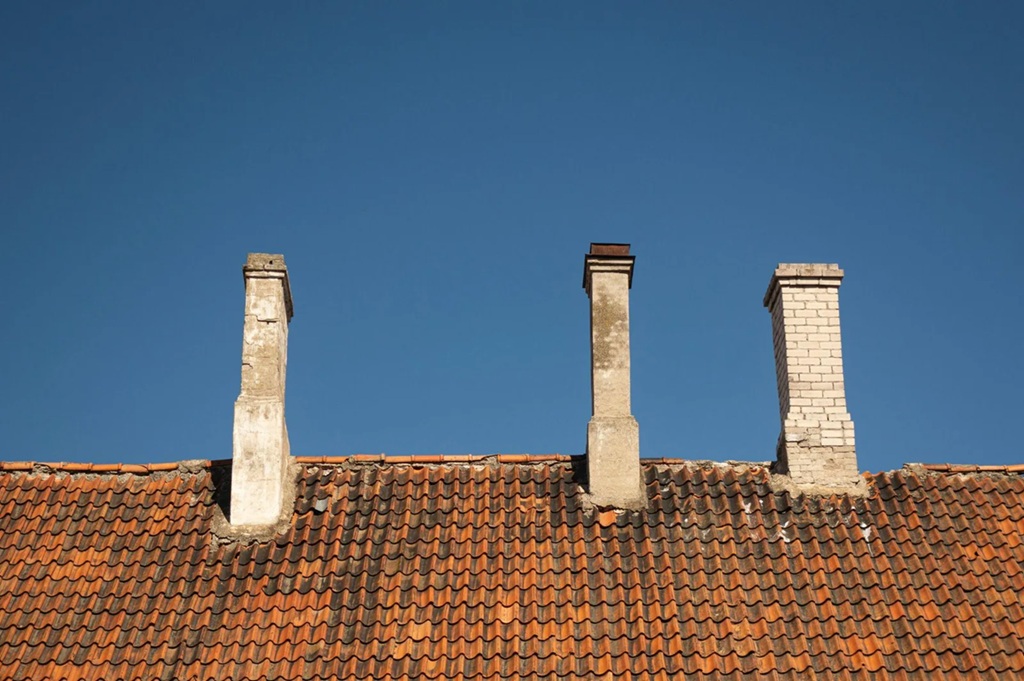
When homeowners think about maintenance, they usually focus on the parts of the house they can easily see. The roof gets inspected after a storm. The HVAC system is serviced before summer and winter. Cracks in the driveway are quickly repaired.
The chimney, however, often receives far less attention.
Because most of the chimney system is hidden from view, many homeowners assume that if they don't see visible damage, everything must be functioning properly. Unfortunately, some of the most serious chimney problems develop inside the structure long before any warning signs become obvious.
Cracked liners, deteriorating masonry, and small gaps inside the chimney can gradually create safety risks that affect the entire home. In many cases, these problems can be repaired through restoration rather than complete reconstruction, but only if they're identified early.
Chimney Damage Usually Starts Where Homeowners Can't See It
A chimney operates in one of the harshest environments in any home.
Every year, it is exposed to extreme temperature changes, moisture, rain, humidity, freezing conditions, and repeated expansion and contraction. Over time, those conditions naturally begin to wear down the materials inside the chimney.
Many traditional chimneys contain clay liners that protect the surrounding structure from heat and combustion byproducts. Like any building material, however, these liners eventually begin to deteriorate.
Small cracks may develop inside the flue. Mortar joints can weaken. Masonry can begin to separate.
The challenge is that homeowners rarely notice these changes because most of the damage occurs inside the chimney rather than on the exterior.
By the time crumbling bricks, staining, or visible cracks appear, the deterioration may have already progressed significantly.
This is why many chimney professionals emphasize inspections as part of routine home maintenance rather than waiting until a problem becomes impossible to ignore.
Why Cracked Chimney Liners Create More Than One Safety Risk
A damaged chimney liner affects much more than the appearance of a fireplace.
The liner serves as a protective barrier that safely directs heat, smoke, and combustion gases out of the home. When cracks or gaps develop, those byproducts may no longer follow their intended path.
In some situations, excessive heat can escape through damaged areas and enter parts of the home that were never designed to withstand high temperatures.
Smoke can also begin to move back into living spaces instead of traveling safely through the flue.
Homeowners may notice several warning signs, including: smoke entering the room, draft problems, strong or unusual odors, crumbling bricks, visible cracks around the chimney
Unfortunately, visible symptoms don't always appear immediately.
Many structural issues remain hidden for years, which is why professionals recommend addressing any sign of chimney deterioration before continuing to use the fireplace.
Even a small crack can become a much larger problem if it's left untreated.
How Ceramic Restoration Repairs a Chimney Without Rebuilding It
When many homeowners hear the word "restoration," they immediately assume they'll need to demolish and rebuild their entire chimney.
Fortunately, that isn't always necessary.
One repair method used to restore damaged chimney liners involves applying a specialized ceramic coating to the interior of the chimney.
According to Chimney Scientists, led by CEO Joe Ochal, the ceramic coating is designed to fill gaps and cracks while helping restore the structural integrity of the chimney through its ceramic restoration process.
Rather than removing the existing masonry, technicians apply a thick liquid ceramic material to the chimney's interior using specialized equipment.
The restoration process typically includes:
Protecting the surrounding work area
Accessing the chimney with ladders or scaffolding
Lowering an applicator into the flue
Applying the ceramic coating
Filling cracks and damaged areas
Inspecting the chimney for additional structural concerns
Repairing the smoke chamber when necessary
Documenting the completed restoration
The goal is to preserve as much of the existing structure as possible while restoring the chimney's ability to function safely.
In many cases, restoration can provide an effective alternative to complete reconstruction.
Why Inspections Matter More Than Repairs
The reality is that most homeowners have no way of knowing when ceramic restoration is necessary.
The interior of a chimney isn't something that can be evaluated with a quick visual inspection from the living room.
This is one reason why chimney professionals consistently recommend annual inspections, particularly for older homes.
An inspection can identify cracks, deteriorating liners, damaged masonry, moisture intrusion, and other structural concerns before they become major repairs.
Chimney Scientists, one of the largest chimney companies in the United States, emphasizes that homeowners should address structural damage before attempting to use their fireplace again.
Preventative maintenance often costs far less than emergency repairs.
More importantly, early intervention can prevent safety hazards that affect not only the chimney itself but also the surrounding structure of the home.
A chimney inspection may not seem as urgent as a leaking roof or a malfunctioning heating system, but it deserves a place on every homeowner's maintenance checklist.
The Bottom Line
Chimneys are constantly exposed to heat, moisture, and changing weather conditions. Deterioration isn't unusual. In fact, it's inevitable.
The problem is that most chimney damage develops out of sight.
A small crack inside the liner today can become a much larger structural issue tomorrow.
Maintaining a chimney isn't simply about preserving the appearance of a fireplace. It's about protecting the safety, efficiency, and long-term health of the entire home.
And when hidden damage is identified early, restoration may be enough to keep a chimney functioning safely for years to come.